Deadly gun and bomb attacks hit Pakistan’s Balochistan province
Balochistan Burning: 145 Rebels and 48 Others Dead in Deadliest Day of Insurgency
At Brainx, we believe…
This catastrophic escalation in Balochistan is not merely a security failure; it is the violent symptom of a decades-old wound left to fester. The coordinated strikes across 12 cities highlight a terrifying evolution in insurgent capabilities, signaling that the state’s strategy of military suppression without political inclusion has pushed the province to a breaking point. This is a battle for resources, identity, and sovereignty that threatens to destabilize the entire region.
The News: A Province Under Siege
In what is being described as one of the darkest days in the history of Pakistan’s southwestern frontier, a massive and highly coordinated wave of violence has engulfed Balochistan. The province, long plagued by a low-level insurgency, witnessed a synchronization of terror rarely seen before, paralyzing life in 12 cities and towns, including the provincial capital, Quetta.
According to Chief Minister Sarfraz Bugti, the scale of the bloodshed is staggering. The attacks, launched by the separatist Baloch Liberation Army (BLA), targeted the very sinews of state control—police stations, paramilitary bases, prisons, and transport infrastructure.
The Casualty Toll
The official figures paint a grim picture of the intensity of the clashes:
- Civilians Killed: At least 31 civilians lost their lives in the crossfire and targeted attacks.
- Security Forces Killed: 17 personnel from the police and paramilitary forces were confirmed dead.
- Insurgents Killed: In a massive retaliatory operation, security forces claim to have killed at least 145 attackers. This figure, if verified, would mark the single largest loss of life for the insurgent group in a single day of operations.
- Scope of Violence: Attacks were reported in over a dozen locations simultaneously, suggesting a massive intelligence failure on the part of the state or a significant leap in the BLA’s operational capacity.
Anatomy of the Assault
The BLA’s offensive was designed to sever the province from the rest of the country and assert temporary control over key zones.
- Infrastructure Targets: Attackers used heavy weaponry and grenades to assault police stations and paramilitary camps.
- Blockades: Key administrative buildings in Quetta were sealed off. Roads connecting major districts were blocked by armed men who checked identity cards, searching for security personnel and workers from other provinces.
- Communication Blackout: To prevent coordination among security forces and panic spreading among the public, mobile phone services were jammed across large swathes of the province.
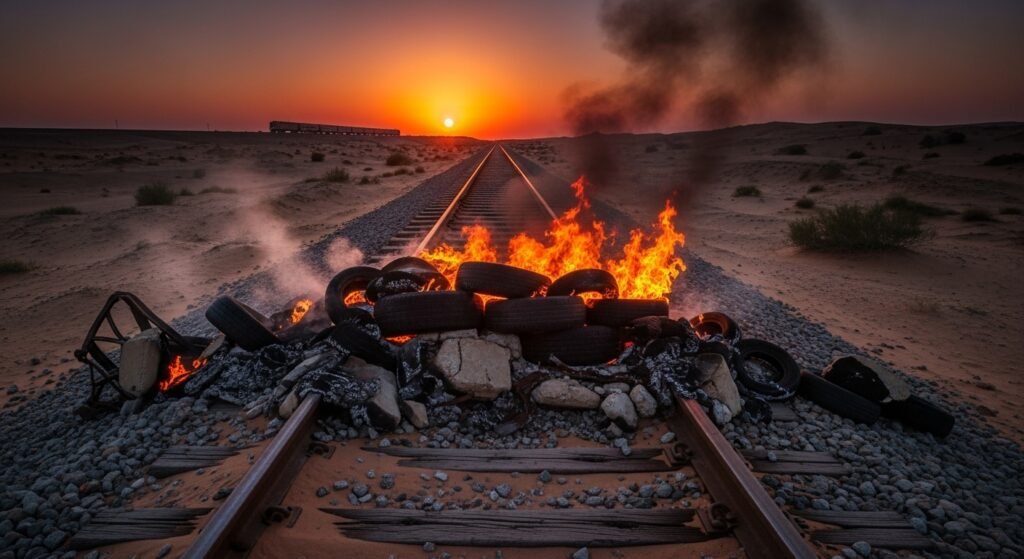
- Transport Halts: Regional train services were suspended immediately as tracks and stations came under threat.
The Government’s “Iron Fist” Response
Prime Minister Shehbaz Sharif issued a stern condemnation of the violence, framing it as an existential battle for the state.
- War on Terror: Sharif pledged to “continue the war against terrorism until its complete eradication,” signaling a likely intensification of military operations in the region.
- The Foreign Hand: Consistent with Islamabad’s long-standing narrative, officials pointed fingers across the border. Pakistan accused India of providing funding, training, and logistical support to the BLA to destabilize the region. New Delhi has repeatedly and vehemently denied these accusations, stating that the unrest is a homegrown reaction to Pakistan’s internal policies.
Deep Dive: The Roots of the Rage
(Detailed Analysis for Brainx Readers)
To understand why 145 men would march to their deaths and why the province is burning, one must look beyond the gunfire to the ground beneath it.
1. The Resource Curse Balochistan is Pakistan’s paradox: it is the country’s poorest province in terms of development indicators, yet it is the richest in natural wealth.
- Land Mass: It covers nearly 44% of Pakistan’s landmass, bordering Iran and Afghanistan and commanding a strategic coastline on the Arabian Sea.
- Mineral Wealth: The land holds vast deposits of natural gas, copper, and gold. The Reko Diq mine, for instance, is one of the world’s largest undeveloped copper-gold deposits.
- The Grievance: The BLA and local activists argue that these resources are extracted by the federal government and foreign partners (often Chinese firms) to fuel the industries of Punjab and Karachi, while the Baloch people live without clean water, electricity, or schools. The insurgents view this as colonial exploitation.
2. A History of Insurgency The conflict is as old as the nation itself. The current insurgency is the fifth wave of separatism since 1948, triggered after the Khan of Kalat (the ruler of the princely state) acceded to Pakistan—a move many Baloch nationalists claim was coerced.
- The Evolution: What began as tribal skirmishes in the mountains has evolved into urban warfare. The BLA has moved from hitting gas pipelines in remote deserts to storming the the Pakistan Stock Exchange and 5-star hotels in Karachi, and now, laying siege to 12 cities simultaneously.
- The Majeed Brigade: The group has formed a suicide squad known as the Majeed Brigade, which has shown a willingness to engage in “fedayeen” (suicide) attacks, a tactic previously associated more with Islamist militants than secular ethno-nationalists.
3. The “Missing Persons” Crisis Fueling the recruitment for groups like the BLA is the issue of Enforced Disappearances.
- The Allegations: Local activists and international rights groups accuse Pakistani security agencies of abducting young Baloch men, students, and activists suspected of separatist sympathies. Many are never seen again; others turn up dead.
- The Cycle: Islamabad denies this policy, but the anger over “missing persons” serves as a powerful recruitment tool. For every activist that disappears, a family is radicalized against the state.
4. The Geopolitical Chessboard Balochistan is not just a local issue; it is a geopolitical pivot point.
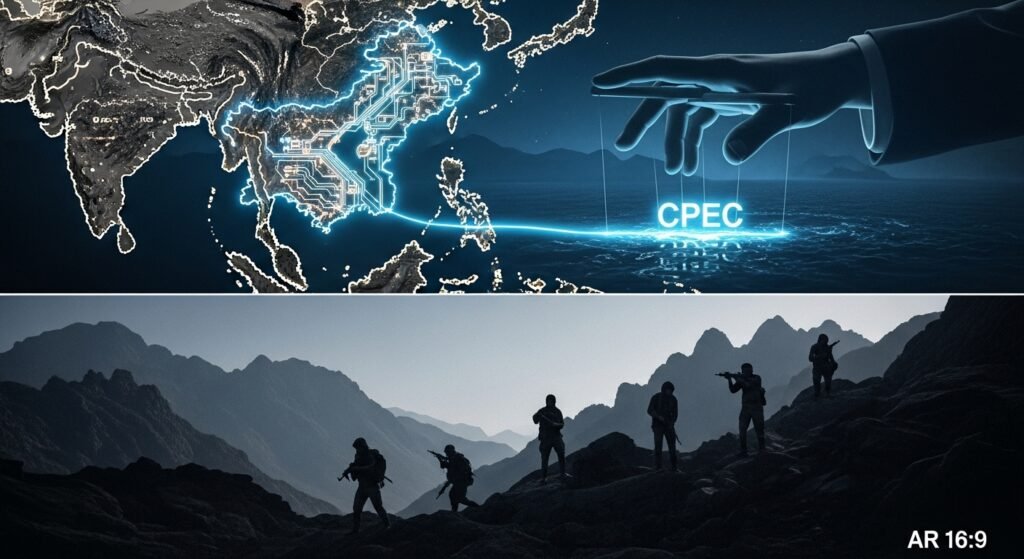
- CPEC: The province is the heart of the China-Pakistan Economic Corridor (CPEC), with the port of Gwadar being the crown jewel. The BLA explicitly targets Chinese nationals and infrastructure, aiming to drive out foreign investment and hurt the Pakistani economy.
- The Borders: The porous borders with Iran and Afghanistan allow for the movement of fighters and weapons. Pakistan frequently accuses militants of having safe havens in these neighboring countries, adding diplomatic friction to the security crisis.
Why It Matters
This unprecedented day of violence matters because it proves that the “containment” strategy has failed. For the common man in Pakistan, this signals economic instability and a potential diversion of funds from development to defense. More broadly, if the state cannot secure 44% of its landmass, the multi-billion dollar investments from global partners—essential for Pakistan’s economic survival—are in jeopardy. We are witnessing the transformation of a low-intensity conflict into a full-scale civil war that threatens to redraw the map of security in South Asia.


Leave a Reply