Dozens of Muslims ‘massacred’ in Nigeria for refusing to join jihadists, says governor
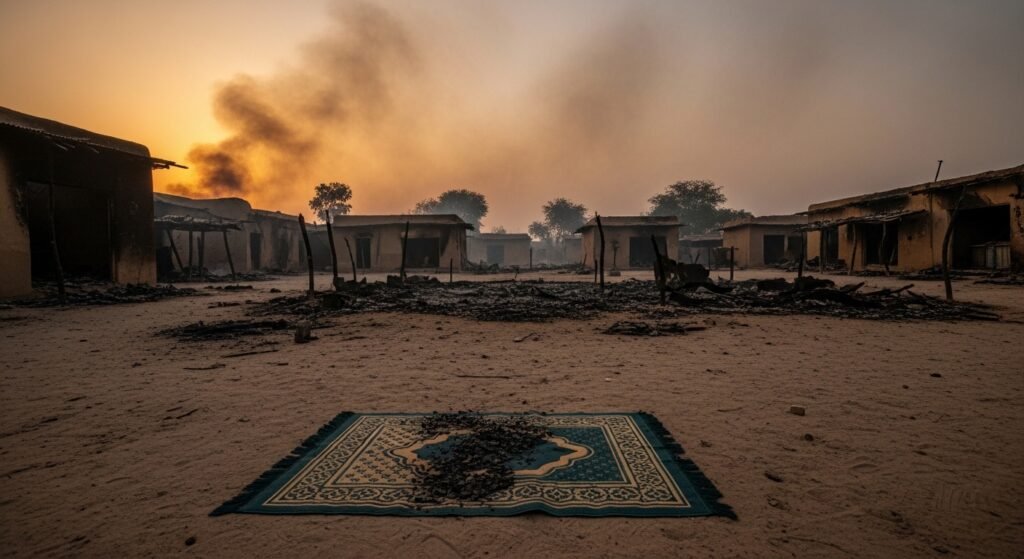
“Massacred for Resisting”: 170 Feared Dead in Nigeria as US Troops Join Fight Against “Strange Doctrine”
At Brainx, we believe…
This horrific massacre serves as a grim wake-up call regarding the expanding footprint of terror in West Africa. At Brainx, we believe the slaughter of innocent civilians for simply rejecting extremist ideology highlights a catastrophic failure of local security architecture. Furthermore, the simultaneous—and historic—acknowledgment of US troops on Nigerian soil signals that this internal war has officially evolved into a global frontline, raising urgent questions about sovereignty, strategy, and the true cost of stability.
The News: A State Under Siege
In one of the deadliest episodes of violence to rock West Africa in recent years, the quiet agrarian communities of Kwara state, Nigeria, have been turned into killing fields. A ferocious, coordinated assault by suspected Islamist militants has left a trail of devastation, with conflicting reports placing the death toll anywhere between 75 and 170 victims.
The attack, which targeted the villages of Woro and Nuku, was not merely a bandit raid for loot; it was an ideological punishment. According to state officials, the villagers were massacred because they refused to “surrender to extremists who preached a strange doctrine.”
The Anatomy of the Massacre
The violence erupted on a Tuesday evening, shattering the peace of the western state.
- The Timeline: The assault reportedly began after 17:00 local time. For three to four agonizing hours, unchecked by security forces, gunmen on motorcycles besieged the villages.
- The Method: Witnesses describe a “ferocious shooting attack.” The assailants did not just shoot; they set fire to shops and homes, burning some victims alive in their sanctuaries.
- Targeted Killings: The violence was personal and punitive. Among the dead were two sons of the local traditional leader, a symbolic strike against the community’s hierarchy. Family members of the leadership were also kidnapped.
- The Abductions: Beyond the dead, 38 people were abducted, dragged into the bush to serve as bargaining chips or forced conscripts for the terror group.
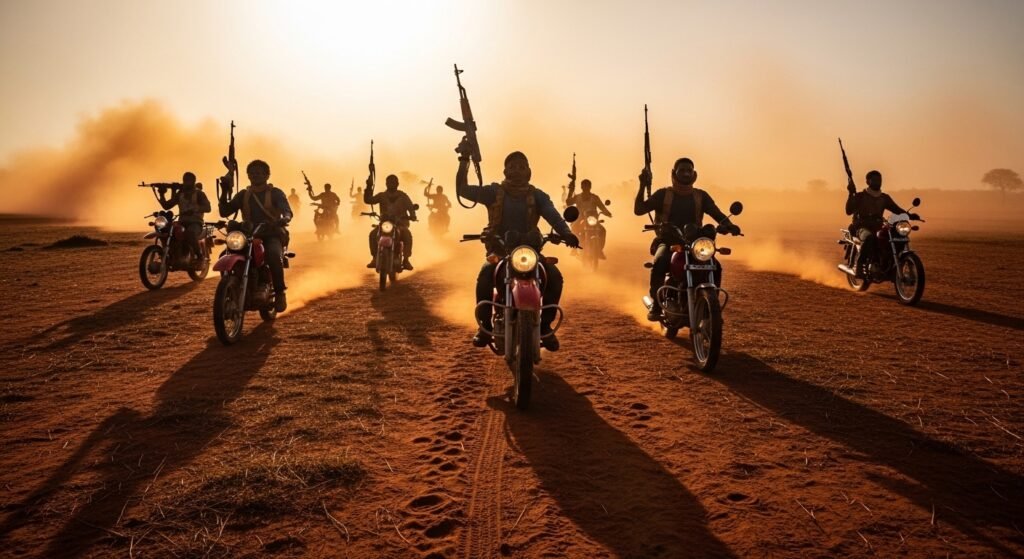
The Death Toll: A Grim Discrepancy
As is common in the fog of rural warfare, the exact number of lives lost remains a subject of harrowing debate, though all sources agree the scale is massive.
- Official State Figure: Governor AbdulRahman AbdulRazaq stated on X (formerly Twitter) that “75 local Muslims were massacred.”
- Local Lawmaker’s Count: A member of the Kwara state house of assembly, Saidu Baba Ahmed, reported that 78 bodies had already been buried. However, he warned the toll could rise to 170 as search teams scour the bush for more corpses.
- Independent Estimates: Humanitarian groups paint a darker picture. A Red Cross official in Kwara, Babaomo Ayodeji, cited reports that the toll stands at 162. Amnesty International went further, stating over 170 people died, noting with horror that many were “shot at close range and some burnt alive.”
The Motive: Resistance to a “Strange Doctrine”
The catalyst for this slaughter was a clash of ideologies.
- The Letter: The militants, suspected to be a splinter faction of Boko Haram, had previously sent a letter to the community announcing their arrival to “preach.”
- The Rejection: The community, adhering to their traditional and mainstream Islamic practices, rejected this “strict interpretation.” They mobilized local security/vigilante groups to resist the encroachment.
- The Retaliation: The attack was a direct reprisal for this defiance. State lawmaker Ahmed confirmed the violence was triggered by the community’s refusal to accept the group’s “strange doctrine.”
The Geopolitical Shift: US Boots on the Ground
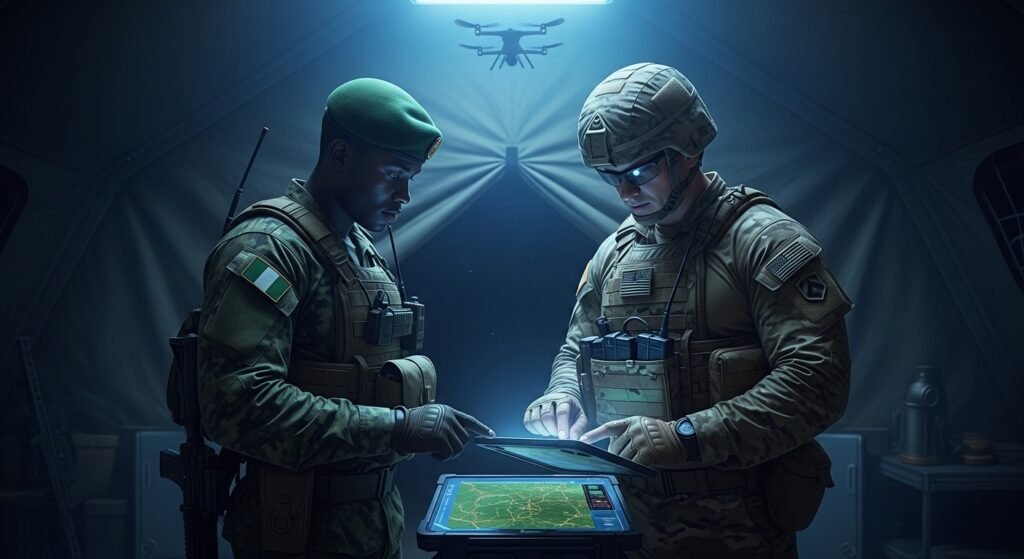
Perhaps the most significant development accompanying this tragedy is the confirmation of direct American military involvement. For the first time, Nigerian officials have officially acknowledged an American troop presence.
- Trump’s Directive: This deployment follows orders from US President Donald Trump in November to “prepare for action” in Nigeria to tackle Islamist groups.
- The Mission: General Dagvin Anderson of US Africa Command (Africom) stated the deployment was at Nigeria’s request and focuses on “intelligence support.” Nigerian Defence Minister Christopher Musa confirmed the partnership but remained tight-lipped on troop numbers or locations.
- Recent Actions: This is not entirely passive support. The US military recently launched airstrikes on Christmas Day targeting camps run by a militant group known as Lakurawa in the northwest.
A Nation on Fire
The Kwara massacre is not an isolated incident but part of a coordinated surge in violence across the nation.
- Katsina State: On the same Tuesday, 21 people were killed in an attack on Doma village.
- Borno State: In the northeast, the traditional stronghold of Boko Haram, 17 people were killed in a separate series of attacks.
- The Governor’s Theory: Governor AbdulRazaq suggested these attacks might be a diversionary tactic, launched “apparently to distract the security forces who have successfully hunted down several terrorist and kidnapping gangs” elsewhere.
Deep Dive: The Religious Dimension
(Analysis for Brainx Ultimate Readers)
This tragedy challenges the simplistic narratives often heard in Western media regarding Nigeria’s conflict. While President Trump has previously highlighted the persecution of Christians, the Governor emphasized that the 75 confirmed victims in Kwara were “local Muslims.” This distinction is crucial. It underscores that the primary victims of Islamist insurgency in Nigeria are often Muslims themselves—those who refuse to subscribe to the radical, violent interpretations of groups like Boko Haram. The conflict is not just inter-religious; it is an intra-religious war for the soul of the community, where moderation is met with bullets.
Why It Matters
This massacre matters because it signifies the total collapse of rural security in Nigeria. For the common man living outside major cities, the government’s writ no longer runs; they are left to choose between submission to terrorists or death. Furthermore, the entry of US troops marks a pivotal moment. While it offers hope for better intelligence and drone support, it also risks internationalizing the conflict, potentially drawing global jihadist attention to West Africa. The future of Nigeria now hangs between an increasingly aggressive insurgency and a desperate reliance on foreign military aid.



Leave a Reply