Gold and silver prices plunge following Trump’s Fed pick announcement
Gold & Silver “Bloodbath”: Prices Crash as Trump Taps Kevin Warsh for Fed Chair
At Brainx, we believe…
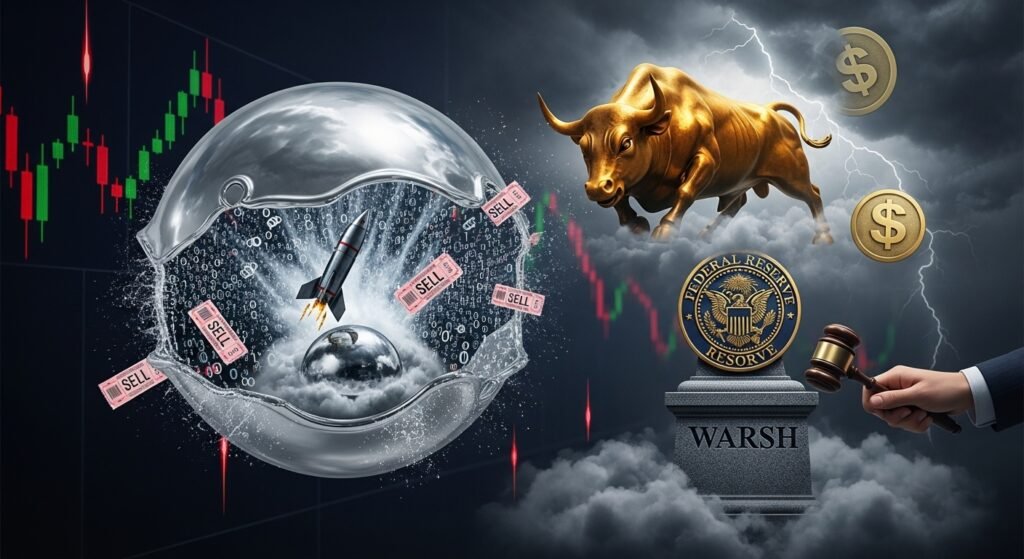
This sudden liquidation in precious metals highlights the dangerous “gamification” of safe-haven assets. The nomination of Kevin Warsh—a credible institutionalist—has pricked the bubble of fear that drove gold and silver to unsustainable heights. It serves as a stark reminder: when a commodity starts trading like a meme stock, the exit door is never wide enough for everyone when the music stops.
The News
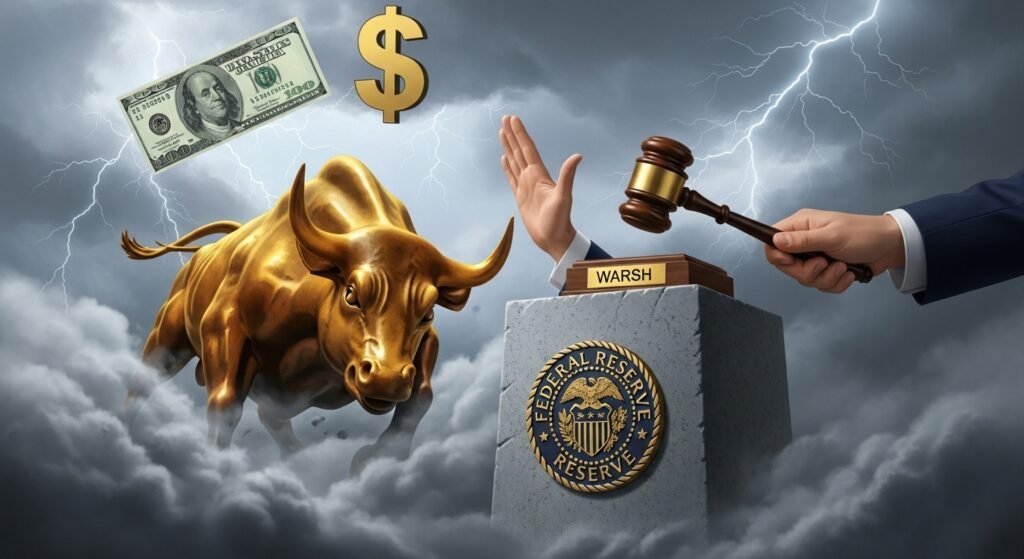
The precious metals market witnessed a historic capitulation on Friday, with gold and silver prices cratering in their worst single-day performance in decades. The trigger for this financial bloodletting was President Donald Trump’s nomination of Kevin Warsh to lead the Federal Reserve, a move that surprisingly calmed Wall Street’s deepest fears about the central bank’s future independence.
The “Elevator Down” Crash
After months of parabolic gains that saw precious metals treated like the “hot new tech darlings” of 2026, the bubble burst with violent speed.
- Gold’s Historic Plunge: Gold futures tumbled approximately 9% on Friday afternoon, settling near $4,901 per ounce. According to Bloomberg data, this represents the metal’s most significant daily decline since the early 1980s.
- Silver’s 27% Nosedive: The volatility was even more extreme in the silver market, which plunged 27% to settle at $83.35 an ounce. MarketWatch reports this as the steepest one-day decline since 1980.
- A “Meme Stock” Unwinding: The speed of the collapse stunned veteran traders. Michael Antonelli, a market strategist at Baird, took to social media platform X to declare: “Silver is just GameStop in 2026.”
The Kevin Warsh Effect
The catalyst for the selloff was political but had immediate financial consequences.
- The Fear Trade: For months, investors had piled into gold and silver, driving prices past $5,600 and $120 respectively. This rally was fueled by widespread anxiety that President Trump would appoint a political loyalist to the Fed—someone who would slash interest rates recklessly to boost the economy, thereby destroying the dollar and the central bank’s credibility.
- The Relief Rally: By tapping Kevin Warsh, a former Fed official respected by both Republicans and corporate executives, Trump signaled a more conventional approach. Warsh is viewed as a “hawk” on inflation but pragmatic on growth.
- Dollar Strength: The nomination reassured global markets that the Fed would remain a serious institution. This renewed confidence caused the US Dollar to surge, making dollar-priced commodities like gold and silver immediately more expensive and less attractive to foreign buyers.
Analyst Reactions: “Too Far, Too Fast”
Market watchers described the day as a necessary, albeit painful, correction for a market that had detached from reality.
- Momentum Reversal: Michael Brown, a strategist at Pepperstone, noted that the old adage of “stairs up, elevator down” didn’t apply. “In fact, it was more a case of ‘elevator up, elevator down,’” he wrote, describing the vertical rise and fall of the metals.
- The Leverage Trap: The crash was exacerbated by highly leveraged traders. As prices dipped, margin calls forced “every man and his dog” to rush for the exit simultaneously, creating a cascading selloff that drove prices lower than fundamentals would dictate.
The Bigger Picture: The Bull is Bruised, Not Dead
Despite the carnage, long-term context remains vital.
- Still Up for the Year: Even after Friday’s collapse, gold prices remain more than 14% higher than where they started in January 2026.
- Silver’s Lead: Silver, despite losing a quarter of its value in hours, is still up 22% year-to-date.
- Outperforming Tech: Remarkably, precious metals continue to outperform the S&P 500, AI-darling Nvidia, and copper so far this year.
Why It Matters
This crash matters because it exposes the fragility of modern market narratives. For the common investor who chased the rally near the top, Friday was a brutal lesson in volatility. However, looking forward, the Warsh nomination signals a return to “adults in the room” monetary policy. If the Fed is perceived as stable and independent,the “end of the world” trade that powers gold may fade, forcing investors to look for value in productive assets rather than bunkers.


Leave a Reply