Heavy gunfire and blasts heard near airport in Niger’s capital
Explosions Rock Niamey: Mystery Attack Targets Niger’s Airport Amid High-Stakes Uranium Standoff
2. Brainx Perspective
This development highlights the extreme volatility currently gripping the Sahel region. At Brainx, we believe the reported attack on Diori Hamani International Airport is not merely a security breach but a symptom of the deepening geopolitical fracture in Niger. With a massive uranium shipment grounded and diplomatic tensions with France at a boiling point, this incident suggests that the country’s strategic assets are now the frontline of a dangerous power struggle.
3. The News
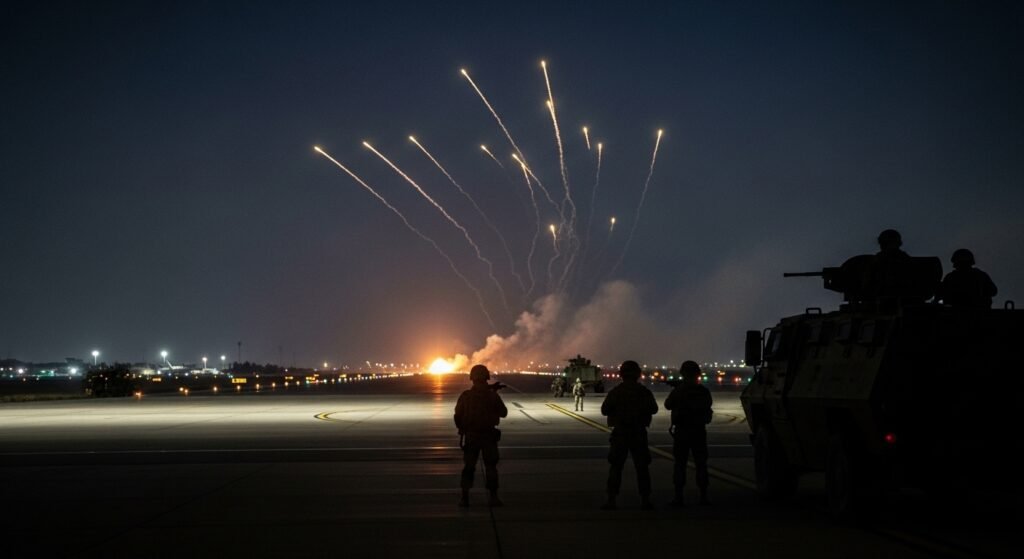
In the early hours of Thursday, the capital of Niger, Niamey, was shaken by sustained heavy gunfire and loud explosions centered around the Diori Hamani International Airport. The incident, which lasted approximately two hours, has plunged the city into uncertainty, occurring just kilometers from the presidential palace occupied by the military junta.
The Incident: A Timeline of Chaos
- Midnight Assault: Residents in neighborhoods adjacent to the airport reported that the disturbance began shortly after midnight. Eyewitnesses described hearing heavy weaponry and seeing projectiles lighting up the night sky.
- Air Defense Activation: Video footage circulating on social media—verified by multiple accounts—appears to show the activation of air defense systems engaging unidentified aerial targets. This suggests a sophisticated level of threat, potentially involving drones or rockets.
- Targeting Aircraft: A local resident speaking to the BBC claimed that shots were fired from the perimeter of the airport, specifically targeting aircraft on the tarmac. Other unconfirmed reports indicate that assailants threw explosive devices into the airport complex before engaging in a firefight with security forces.
- The Calm After the Storm: By approximately 2:00 AM local time, the firing subsided. Government sources later stated that the “situation is under control,” though they offered no specific details on the attackers or their motives.
Immediate Fallout & Security Response
- Flight Diversions: The airspace over Niamey became a no-go zone. FlightRadar24 data confirmed that several international flights bound for the capital were diverted to neighboring countries.
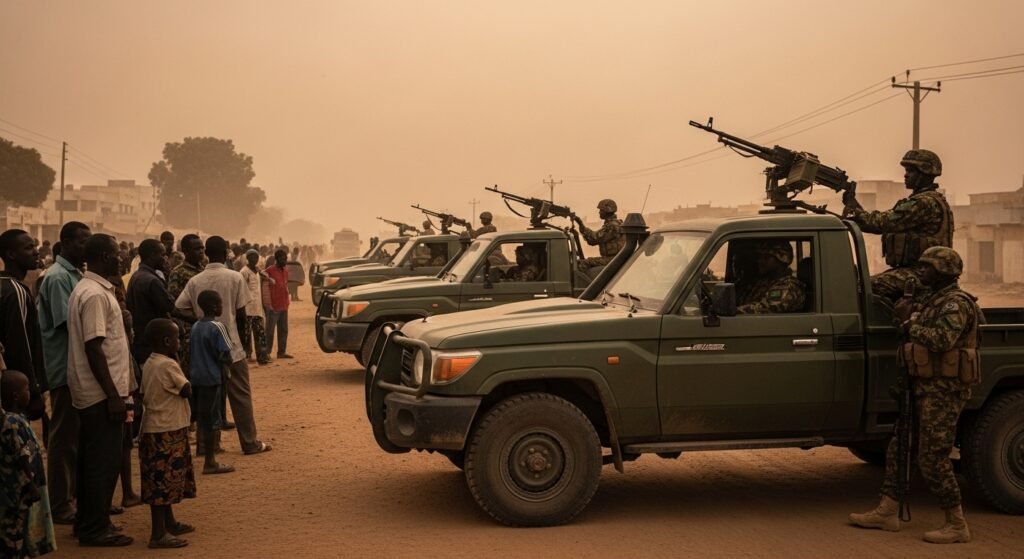
- Military Deployment: By Thursday morning, a heavy security cordon was established around the airport. Armored vehicles and elite troops were visible, locking down the strategic transport hub.
- Public Reaction: Despite the fear caused by the explosions, supporters of General Abdourahamane Tiani’s military government took to the streets in the morning. These demonstrations were likely organized to project resilience and support for the junta against perceived internal or external destabilization attempts.
The Uranium Connection: A Strategic Flashpoint While official statements remain vague, a foreign affairs ministry official hinted to the Anadolu news agency that the attack might be linked to a highly sensitive cargo currently grounded at the airport.
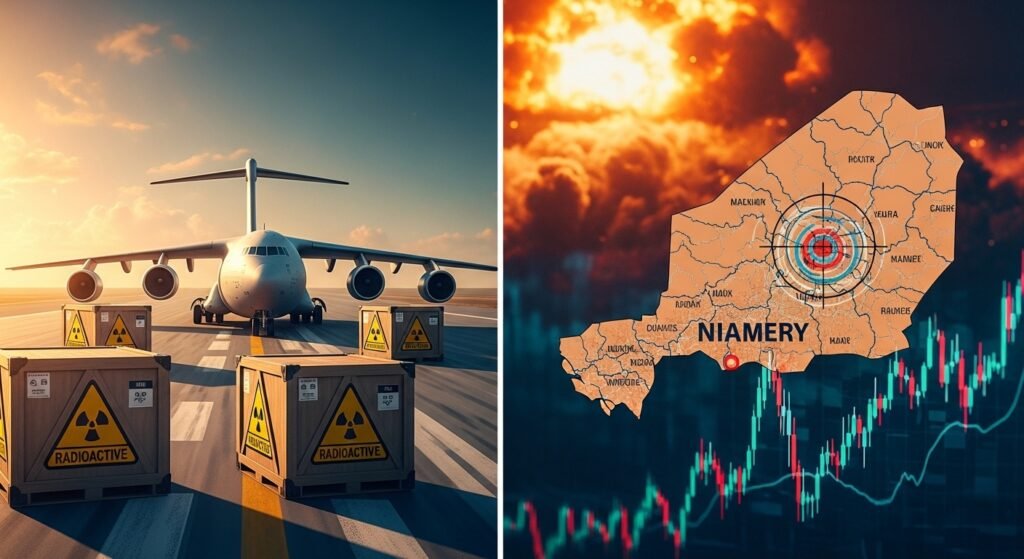
- The Stuck Shipment: A massive shipment of yellowcake uranium, destined for export, has been stuck at the airport for weeks.
- Nationalization Disputes: This follows the military government’s aggressive move to nationalize the country’s uranium mines, effectively seizing control from foreign entities, primarily French companies like Orano.
- Diplomatic Deadlock: The shipment is currently in legal limbo due to unresolved complications with France. Intelligence sources speculate that the attack could have been a sabotage attempt aimed at this strategic asset, or a false-flag operation designed to justify further militarization of the resource sector.
Context: A Nation on Edge
- Junta Rule: Niger is currently led by General Abdourahamane Tiani, who seized power in a July 2023 coup. The junta has since expelled French and American troops, pivoting toward new alliances, including with Russia.
- Regional Insurgency: Like its neighbors in the “Alliance of Sahel States” (Mali and Burkina Faso), Niger is battling a relentless jihadist insurgency. Groups linked to Al-Qaeda and the Islamic State have frequently attacked military outposts, though a direct assault on the capital’s international airport represents a significant escalation in their capabilities.
Deep Dive Analysis: The Geopolitics of the Niamey Attack
(Extended Context for the “Brainx Ultimate” Reader)
To understand the gravity of Thursday’s explosions, one must look beyond the immediate gunfire. Niamey is not just a capital city; it is the pivot point of the new “Scramble for Africa.”
1. The Energy War: Niger provides a significant percentage of the European Union’s uranium imports, essential for nuclear power. The junta’s decision to revoke operating permits for foreign miners has sent shockwaves through global energy markets. If this attack was indeed targeted at the uranium shipment, it introduces a terrifying new variable: the weaponization of energy infrastructure by non-state actors or covert foreign operatives.
2. The Security Vacuum: Following the expulsion of Western forces, the security architecture of Niamey has changed. While Russian “Africa Corps” (formerly Wagner) advisors have arrived, the integration of new air defense systems is still ongoing. The activation of anti-air batteries on Thursday night suggests that the junta is nervous about aerial threats—fearing perhaps not just terrorists, but foreign intervention.
3. The fragility of the Junta: Attacks on the capital are often indicators of cracks within the military hierarchy. While General Tiani has projected strength, an assault on the airport—the country’s lifeline to the outside world—undermines the narrative that the military takeover has improved security. If the junta cannot protect the capital’s airspace, their grip on power may be more tenuous than it appears.
4. “Why It Matters” (Conclusion)
This incident matters because it threatens to turn a diplomatic standoff into a kinetic war. For the common man in Niger, it means potential isolation, as airlines may permanently suspend routes, cutting off vital supplies. Globally, instability in a top uranium producer could spike energy prices. We are witnessing the dangerous intersection of resource nationalism and terrorism, a mix that rarely ends peacefully.




Leave a Reply