Iran Ceasefire Deal Creates New Political Challenges for Netanyahu
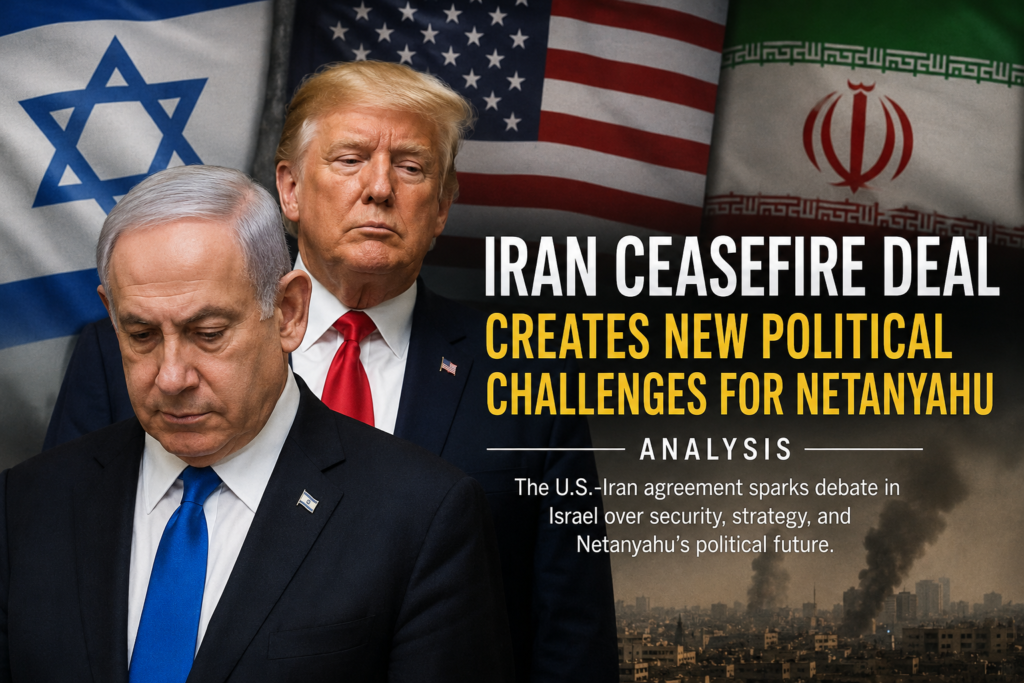
The recent ceasefire agreement involving the United States and Iran has introduced a new phase of political and strategic debate in the Middle East. While the agreement has been welcomed by some as a step toward reducing tensions in a region that has experienced years of instability, it has also generated significant discussion within Israel, particularly regarding its potential impact on the country’s security policies and political landscape.
At the center of this debate is Israeli Prime Minister Benjamin Netanyahu, one of the most influential figures in Israeli politics over the past several decades. Throughout much of his political career, Netanyahu has consistently emphasized the importance of confronting security threats, particularly those linked to Iran and its regional allies. As a result, any major diplomatic development involving Iran is likely to have important political consequences for both his government and the wider Israeli public.
A Changing Regional Environment
The Middle East has undergone significant changes in recent years. Conflicts, diplomatic initiatives, economic pressures, and shifting alliances have all contributed to a rapidly evolving political environment. Governments throughout the region have been forced to adapt their strategies as new challenges and opportunities emerge.
The ceasefire agreement is being viewed by many analysts as part of this broader transformation. Supporters argue that reducing military tensions can help create conditions for greater stability and allow governments to focus on economic development, reconstruction efforts, and diplomatic engagement.
Critics, however, caution that long-standing disagreements and security concerns do not disappear simply because a ceasefire has been reached. They argue that underlying disputes remain unresolved and may continue to influence regional politics for years to come.
For Israel, these debates are particularly important because security concerns remain among the most significant issues shaping public opinion and government policy.
Netanyahu’s Long-Term Focus on Security
Benjamin Netanyahu has built much of his political reputation around national security. During multiple terms as prime minister, he has frequently argued that Israel must remain vigilant against potential threats and maintain strong defensive capabilities.
One of the recurring themes of Netanyahu’s leadership has been the challenge posed by Iran. Israeli governments across different political parties have expressed concerns about Iran’s regional influence, missile programs, and nuclear ambitions. Netanyahu, however, made these concerns a central feature of his public messaging both domestically and internationally.
As a result, any agreement involving Iran is often evaluated through the lens of Netanyahu’s long-standing security agenda. Supporters of the prime minister argue that his policies helped maintain international attention on issues that Israel considers critical to its security.
Others contend that changing regional realities may require new approaches that place greater emphasis on diplomacy and multilateral cooperation.
Domestic Political Reactions
The ceasefire agreement has generated a variety of responses within Israel’s political system. Opposition leaders have questioned whether the arrangement sufficiently addresses Israel’s security concerns and have called for detailed assessments of its potential consequences.
At the same time, members of Netanyahu’s governing coalition have expressed differing views regarding the agreement. Some political figures believe that Israel should retain maximum flexibility in responding to security threats. Others have emphasized the importance of maintaining close coordination with international partners, particularly the United States.
Such disagreements are not unusual in democratic political systems. Security policy often involves balancing competing priorities, including military readiness, diplomatic relationships, economic considerations, and public opinion.
As debate continues, lawmakers, analysts, and citizens are examining how the agreement could influence Israel’s strategic position in both the short and long term.
The Importance of the U.S.-Israel Relationship
One of the most significant aspects of the situation is its impact on relations between Israel and the United States.
For decades, the United States has been Israel’s closest strategic partner. The two countries cooperate on a wide range of issues, including defense, intelligence sharing, technology, and regional security initiatives.
Although the alliance remains strong, differences in policy approaches occasionally emerge. American and Israeli leaders may share similar objectives while disagreeing on the most effective methods for achieving them.
The current ceasefire agreement has highlighted some of these differences. Analysts note that allies can maintain close relationships even when they hold varying views on specific diplomatic or security matters.
The challenge for policymakers is finding ways to preserve cooperation while addressing areas of disagreement through dialogue and negotiation.
Security Considerations Moving Forward
Security remains a central concern for Israeli decision-makers. Government officials continue to emphasize that protecting citizens and maintaining national defense capabilities are top priorities.
The ceasefire agreement has therefore prompted extensive discussion about how Israel should respond to future developments. Some experts argue that diplomatic engagement can help reduce the risk of broader regional conflict. Others believe that strong deterrence remains essential for preserving stability.
Many analysts suggest that the most effective approach may involve a combination of military preparedness and diplomatic efforts. By maintaining defensive capabilities while supporting diplomatic initiatives, governments may be able to reduce tensions without compromising security.
The effectiveness of this approach will depend largely on how regional actors behave in the months and years ahead.
Public Opinion and Electoral Implications
Political developments related to national security often have a significant impact on public opinion. Israeli voters traditionally place considerable importance on issues such as defense, regional stability, and international relations.
As future elections approach, political parties are expected to present competing visions for addressing these challenges. Some candidates may advocate for stronger military measures, while others may emphasize diplomatic engagement and regional cooperation.
For Netanyahu, the debate represents both a challenge and an opportunity. Supporters argue that his experience provides valuable leadership during uncertain times. Critics contend that changing circumstances require fresh ideas and new policy approaches.
Ultimately, voters will decide which vision they believe best serves Israel’s interests.
Broader Regional Implications
The significance of the ceasefire extends beyond Israel and Iran. Countries throughout the Middle East are closely monitoring developments and evaluating how they may affect regional stability.
Reduced tensions could encourage greater economic cooperation, investment, and diplomatic engagement across the region. Businesses and investors generally prefer predictable environments where long-term planning is possible.
At the same time, governments remain cautious. Many regional disputes involve complex historical, political, and security issues that cannot be resolved quickly.
As a result, observers stress the importance of realistic expectations. While ceasefires can create opportunities for progress, lasting stability typically requires sustained diplomatic effort and cooperation among multiple stakeholders.
The Role of Diplomacy
Diplomacy continues to play a crucial role in managing international disputes. Throughout history, negotiations have often provided pathways for reducing tensions and preventing conflicts from escalating.
Supporters of diplomatic engagement argue that communication helps build understanding and allows governments to address disagreements through peaceful means. Even when major differences remain, dialogue can reduce uncertainty and create opportunities for compromise.
Critics sometimes question whether diplomatic agreements can effectively address deep-rooted disputes. However, many experts believe that diplomacy remains an essential tool alongside economic, political, and security measures.
The current ceasefire agreement will likely be evaluated over time based on its ability to maintain stability and encourage constructive engagement among regional actors.
Looking Ahead
Predicting the future of Middle Eastern politics is never easy. The region’s political landscape is shaped by numerous factors, including domestic politics, international alliances, economic conditions, and security concerns.
What is clear is that the ceasefire agreement has created a new set of political and strategic questions for leaders throughout the region. In Israel, these questions are particularly significant because they intersect with ongoing debates about security, diplomacy, and national priorities.
For Prime Minister Benjamin Netanyahu, the coming months may prove especially important. His government’s response to changing regional dynamics could influence public opinion, diplomatic relationships, and future policy decisions.
Whether the agreement ultimately contributes to greater stability or generates new challenges remains to be seen. What is certain is that policymakers, analysts, and citizens across the Middle East will continue to watch developments closely.
As discussions continue, the focus for many observers remains on finding practical solutions that promote security, reduce tensions, and create opportunities for long-term peace and stability. The success of these efforts will depend not only on individual leaders but also on the willingness of governments and institutions to engage constructively with one another in pursuit of shared regional interests.
Leave a Reply