Israel eyes regime change in Iran – and is counting on Trump to make it happen
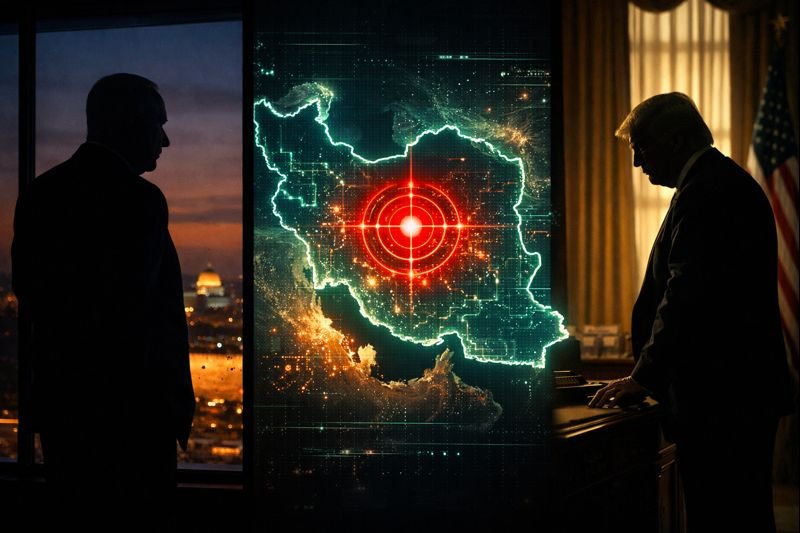
“Now or Never”: Israel’s Strategic Silence as US Considers Regime Change in Iran
At Brainx, we believe the deafening silence from Tel Aviv amidst Washington’s military build-up signals a seismic shift in Middle Eastern geopolitics. Benjamin Netanyahu’s calculated reticence highlights a dangerous gamble: allowing the US to lead a “maximalist” strike aimed not just at deterrence, but at toppling the Iranian regime entirely—a move that could either liberate the region or plunge it into catastrophic chaos.
The News: A Quiet Before the Storm
As the United States accelerates its military presence in the Middle East, a conspicuous hush has fallen over Israel’s leadership. While Iranian officials warn of an “immediate and unprecedented” response to any American aggression, Israeli Prime Minister Benjamin Netanyahu and his government have refrained from their usual public bellicosity.
According to intelligence insiders, this silence is not a sign of hesitation, but a deliberate strategy. Israel is positioning itself in the shadow of its superpower ally, pushing privately for a decisive blow that could reshape the Middle East for decades.
The Strategy: “Let the Americans Lead”
Former senior officials within Israel’s defense apparatus suggest that Netanyahu views the current geopolitical alignment—with Donald Trump in the White House and US forces massing in the Gulf—as a fleeting “golden moment.”
- Strategic Patience: Asaf Cohen, former deputy director of Israel’s signals intelligence unit (Unit 8200), explains the logic: “The leadership believes we should allow the Americans to lead the way this time because they are stronger, have more capabilities, and have much more legitimacy in the world.”
- Behind Closed Doors: While public statements are scarce, private coordination is intense. Israel’s military intelligence chief, Shlomi Binder, was in Washington this week meeting with US counterparts. Reports indicate the agenda focused exclusively on potential targets within Iran.
- Maximalist Goals: Danny Citrinowicz, a 25-year veteran of Israel Defense Intelligence, believes Netanyahu is quietly urging Trump to avoid “symbolic” strikes. Instead, he is advocating for a campaign robust enough to trigger regime change—the only outcome Netanyahu believes will permanently end the nuclear threat.

The 12-Day War: A Lesson in Vulnerability
The push for a decisive US strike is rooted in the trauma of last year’s “12-Day War.”
- The Conflict: When Israel and the US previously targeted Iran’s nuclear and ballistic missile sites, Tehran retaliated with a barrage of hundreds of ballistic missiles.
- The Cost: Despite Israel’s advanced air defenses, some missiles penetrated the Iron Dome, striking apartment blocks in Tel Aviv and killing at least 28 people.
- The Fear: Analysts argue that a limited strike this time would leave the regime intact and vengeful. “Netanyahu is afraid Israel will [again] go through the pain of an attack without a change of regime,” says Citrinowicz. The consensus among Israeli hawks is that if the populace must endure Iranian missiles again, the prize must be the total dismantling of the Ayatollah’s rule.
The “Total Evil” Doctrine vs. Diplomatic Risks
The debate within Israel is stark. While some favor a diplomatic “new deal” to curb Iran’s nuclear ambitions, the prevailing sentiment in the Knesset’s Defense Committee is one of uncompromising force.
- Opposition Support: Even political opponents of Netanyahu, like Moshe Tur-Paz of the Yesh Atid party, agree on the nature of the threat. “When you deal with total evil, you don’t act limited,” Tur-Paz stated. “There’s a consensus that Israel should act much stronger.”
- The Opportunity: With Iran’s proxy forces (like Hezbollah and Hamas) weakened and domestic anti-government protests eroding the regime’s legitimacy, experts like Cohen argue that Iran is at its weakest point in history. “It’s now or never,” he warns.
The Trump Factor: War or “Pink Lines”?
The wildcard remains President Donald Trump. His administration is reportedly weighing options ranging from surgical strikes to full-scale regime change, while simultaneously offering fresh negotiations.
- Red Lines or Pink Lines? Cohen notes that both Trump and Supreme Leader Khamenei are pragmatic. He recalls that during past negotiations, Iran’s “red lines” often turned into “pink lines”—flexible and changeable.
- The Gamble: Netanyahu’s strategy relies on Trump abandoning the idea of a deal. If Washington lowers the bar for negotiations to focus solely on the nuclear program, leaving Iran’s proxy network intact, Israel will view it as a strategic failure.
Public Sentiment: “Switch Regimes”
On the streets of Tel Aviv, the scars of the last war are fresh, but the resolve is hardening. Residents like Neria, a young Israeli, reflect a grim pragmatism: “It won’t be the first time we’ll deal with the bombs – it’s not nice, but if it’s going to help us in the longer term to feel safer here then we will have to go through it.”
Polls consistently show a strong majority of Jewish Israelis support military action against Iran, viewing the current regime in Tehran as an existential threat that cannot be managed, only removed.
Why It Matters
This standoff matters because the Middle East stands on a razor’s edge. For the common man—whether in Tel Aviv, Tehran, or the wider region—the consequences of a miscalculation are existential. A successful regime change could liberate millions and stabilize the region; a failed one could unleash a civil war in Iran and a missile war across the Levant that makes previous conflicts look like skirmishes. We are witnessing a high-stakes poker game where the chips are human lives and nuclear warheads.


Leave a Reply