Two US soldiers and interpreter killed by IS gunman in Syria, US says
Shadows in the Desert: The Deadly Palmyra Ambush and the Unfinished War Against ISIS
At Brainx, we believe…
This development highlights a critical and often overlooked reality: the territorial defeat of a terrorist organization does not equate to its ideological or operational extinction. The tragic ambush in Palmyra is a stark indicator that while the maps have changed, the lethal volatility of the Syrian conflict remains a clear and present danger to global stability.
The Incident: A Sudden Eruption of Violence
The stillness of the central Syrian desert was shattered recently in an incident that has sent shockwaves through the Pentagon and the international intelligence community. In a stark reminder of the costs of prolonged military engagement, a routine operation in the historic city of Palmyra turned into a deadly confrontation.
Key Details of the Ambush:
- The Casualties: The attack resulted in the tragic death of two United States soldiers and one U.S. civilian interpreter.
- The Wounded: Three additional service members sustained injuries during the firefight, highlighting the intensity of the engagement.
- The Aggressor: U.S. military officials have confirmed the attack was initiated by a “lone gunman” affiliated with the Islamic State (ISIS).
- The Outcome: American forces responded swiftly and decisively, engaging the assailant. The gunman was killed during the exchange of fire, preventing further loss of life among the coalition unit.
While the ambush was executed by a single individual, the implications are far-reaching. This was not merely a random act of violence; it was a tactical signal from an insurgency that refuses to fade into history.
Analysis: The Mirage of “Post-Conflict” Stability
To understand why an ambush in Palmyra matters in 2026, one must look beyond the headlines and dissect the geopolitical anatomy of Syria. The narrative often consumed by the public is one of a war that has “wound down.” However, the reality on the ground is a fractured landscape where dormant cells wait for the slightest lapse in security.
1. The Strategic Significance of Palmyra
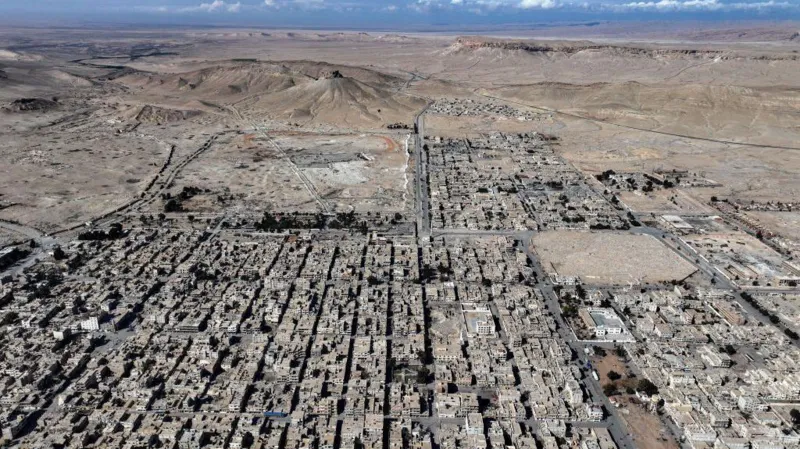
Palmyra is not just an archaeological treasure; it is a geographic pivot point. Sitting in the center of Syria, it connects the capital, Damascus, to the resource-rich eastern provinces.
- Historical Context: During the height of the Caliphate, ISIS captured Palmyra twice, using the ancient amphitheater for gruesome executions and destroying invaluable cultural heritage.
- Current Status: While the Syrian government (backed by Russia) nominally controls the area, the surrounding “Badiya” (desert) is vast, rugged, and impossible to police fully. It is the perfect breeding ground for guerilla warfare.
2. From Caliphate to Insurgency
The U.S. and its allies, particularly the Syrian Democratic Forces (SDF), achieved a monumental victory in 2019 by destroying the physical “Caliphate” at Baghouz. However, military doctrine teaches that defeating an army is different from defeating an insurgency.
- The Shift: ISIS has transitioned from a land-holding quasi-state to a shadowy network of sleeper cells.
- The Tactic: They no longer seek to hold cities. Instead, they rely on hit-and-run attacks, assassinations, and ambushes—like the one in Palmyra—to demoralize international forces and terrorize local populations.
3. The U.S. Footprint: A High-Stakes Presence
The presence of U.S. troops in Syria is a subject of intense debate in Washington. Currently, a relatively small contingent (often fewer than 1,000 personnel) remains.
- The Mission: officially, the mission is “Operation Inherent Resolve”—to ensure the enduring defeat of ISIS.
- The Risks: As this ambush demonstrates, small footprints carry high risks. Troops are often operating in hostile territory where the line between friend and foe is blurred. The loss of a civilian interpreter is particularly poignant, emphasizing the reliance on local expertise and the shared dangers faced by support staff.
The Geopolitical Chessboard
This incident does not happen in a vacuum. Syria remains a crowded theater involving multiple global powers, each with conflicting agendas.
- The Russian Factor: Russia remains the primary backer of the Assad regime. Their air force dominates the skies over Palmyra. The fact that an ISIS attack occurred in an area theoretically under the regime/Russian sphere of influence exposes the cracks in their security apparatus.
- The Iranian Influence: Iranian-backed militias heavily populate the areas stretching from the Iraqi border to Palmyra. Tensions between U.S. forces and these militias add another layer of complexity to force protection.
- The Resurgence of Extremist Ideology: The “lone gunman” theory is troubling. It suggests that ISIS retains the ability to radicalize and deploy individuals without needing a massive command-and-control structure. This “decentralized jihad” is harder to track and harder to stop than conventional battalions.
The Road Ahead: Why Vigilance is Non-Negotiable
The deaths of these two soldiers and the interpreter are a somber metric of the price of peace. The “Brainx Ultimate” analysis suggests that a complete U.S. withdrawal, often touted as a political goal, could lead to a security vacuum similar to what occurred in Iraq in 2011—a vacuum that ISIS originally exploited to rise to power.
Required Actions for the Coalition:
- Intelligence Enhancement: Moving from combat patrols to intelligence-driven raids to dismantle sleeper cells before they strike.
- Partner Support: Continuing to train and equip local partner forces to handle the burden of security.
- Diplomatic Engagement: Managing the de-confliction channels with Russia to ensure that the fight against ISIS doesn’t spiral into a great-power conflict.
Why It Matters (Conclusion)
This tragedy impacts the common man by underscoring that global security is interconnected; instability in the Syrian desert eventually influences migration crises and terror threats in the West. It serves as a grim reminder that the war on terror is a generational struggle, requiring patience, sacrifice, and the understanding that “peace” is not a final destination, but a state that must be constantly maintained.


Leave a Reply