US forces attempt to board oil tanker after pursuit across Atlantic
1. Catchy Headline
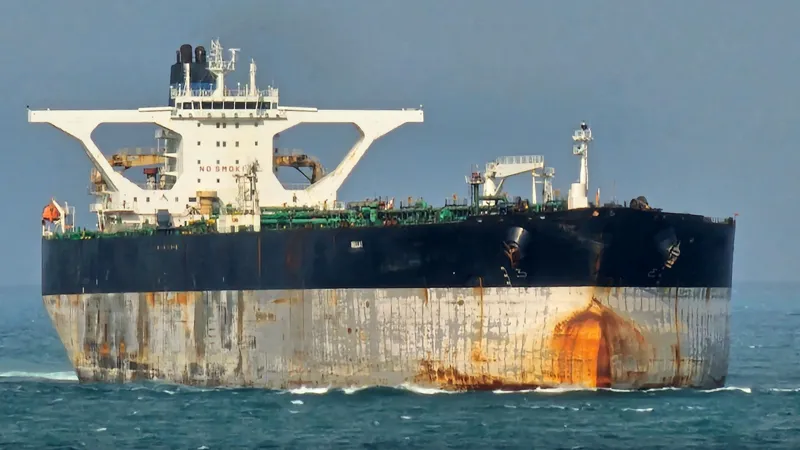
High Seas Showdown: US Forces and Russian Subs Lock Horns in Atlantic Tanker Chase
2. “Brainx Perspective” (Intro)
At Brainx, we believe this developing maritime standoff represents a volatile escalation in the global energy conflict. The direct involvement of Russian naval assets to shield a sanctions-busting tanker signals a dangerous shift: the “shadow war” over oil is moving from covert maneuverings to overt military confrontation on the high seas.
3. The News (Body)
A tense geopolitical drama is currently unfolding in the freezing waters of the North Atlantic, involving a rogue oil tanker, US military hunters, and a protective cordon of Russian naval vessels.
The Core Conflict United States forces have launched a complex operation to seize a tanker suspected of transporting sanctioned Venezuelan oil. In a bold counter-move, the Russian Federation has reportedly deployed a submarine and other naval assets to escort the vessel, effectively daring US forces to intervene.
Key Developments:
- The Target Vessel: The ship in question was previously known as the Bella 1 and sailed under the Guyanese flag. It has since been renamed the Marinera and reflagged as a Russian vessel—a tactical maneuver designed to complicate interception.
- The Pursuit: The tanker is currently positioned between Iceland and the British Isles. It is being tracked by US forces, with reports of up to 10 US military transport aircraft and helicopters converging in the region, coinciding with the ship’s approach to Europe.
- Russian Intervention: Two US officials confirmed that Russia has dispatched a submarine and surface vessels to escort the Marinera. The Russian Foreign Ministry asserts the ship is in international waters and compliant with maritime law, warning against “disproportionate” US aggression.
- Previous Encounters: The US Coast Guard had previously attempted to board the vessel in the Caribbean using a seizure warrant for sanctions violations. Following that near-miss, the ship dramatically altered its course toward the North Atlantic.
- Current Status: The vessel reports being empty, though it has a history of carrying Venezuelan crude. It is suspected of also trafficking Iranian oil, breaching multiple layers of US sanctions.
The “Dark Fleet” Tactic: Reflagging
Maritime intelligence experts warn that the Marinera is employing classic “dark fleet” evasion tactics.
- Identity Laundering: By switching from a Guyanese flag to a Russian one, the vessel attempts to gain the sovereign protection of a nuclear power.
- Legal Shields: Under the UN Convention on the Law of the Sea (UNCLOS), stateless vessels are vulnerable to boarding. However, a ship flying a Russian flag enjoys sovereign immunity safeguards, making a US boarding action a potential diplomatic crisis.
- A Broader Trend: Since the recent US seizure of another tanker, the Skipper, analysts have identified at least 19 US-sanctioned tankers that have suddenly switched to Russian registry.
The Geopolitical Flashpoint: The Maduro Context
This naval standoff is not an isolated incident but a direct aftershock of a massive geopolitical earthquake. The tension follows the recent US operation in Caracas, which resulted in the arrest of Venezuela’s Nicolás Maduro.
- Regime Decapitation: The text reports that US forces conducted a high-stakes extraction operation in Caracas, arresting Maduro and his wife on drug and weapon charges.
- Chaos in Caracas: The operation reportedly involved the bombardment of targets within the city, leaving the region in a state of shock and power vacuum.
- Russian Response: The rush to reflag tankers and provide naval escorts appears to be Moscow’s strategic response to secure assets and project power in the wake of their ally’s detention.
Surveillance and Tracking
- Visual Confirmation: Footage analyzed by BBC Verify (sourced from Russia Today) shows a US Coast Guard Legend-class cutter shadowing the tanker.
- Location Data: AIS tracking places the Marinera roughly 300km (186 miles) south of Iceland.
- US Readiness: The US Southern Command has stated it remains “vigilant, agile, and postured” to track and engage vessels of interest, signaling that the option to board remains on the table.
4. “Why It Matters” (Conclusion)
This standoff tests the limits of international maritime law and the enforcement of US sanctions. For the common man, it highlights how distant political conflicts can militarize trade routes, potentially disrupting global energy supplies and increasing the risk of an accidental military clash between nuclear superpowers in the open ocean.



Leave a Reply