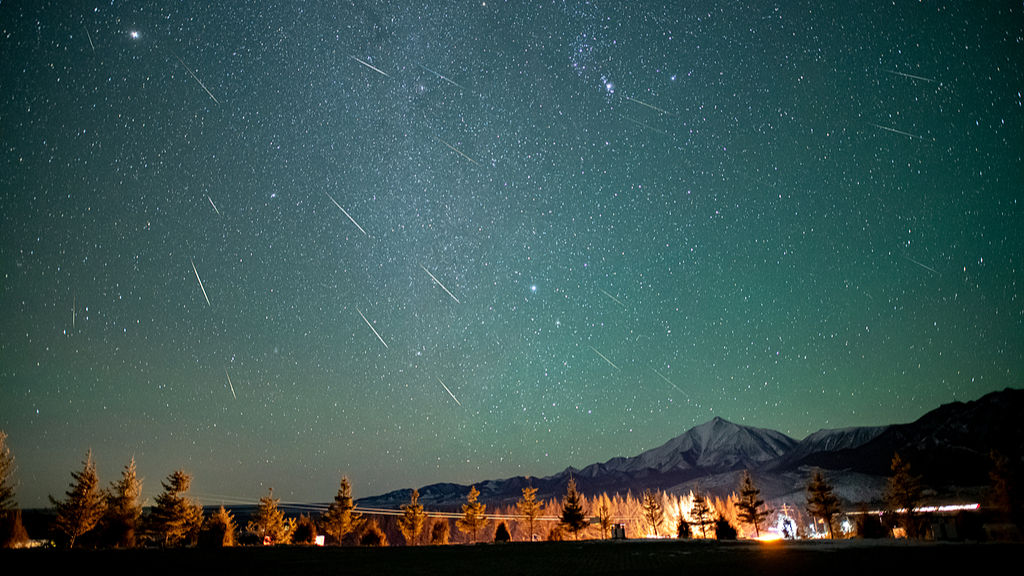
Geminid meteor shower to illuminate mid-December sky

1. Catchy Headline
Geminids 2025: Why the “King of Meteor Showers” is the Only Sky Event You Can’t Miss
2. “Brainx Perspective” (Intro)
At Brainx, we believe the Geminid meteor shower is more than a celestial spectacle; it is a rare encounter with a cosmic anomaly. Unlike ordinary showers born from icy comets, the Geminids originate from a bizarre “Rock Comet” that defies standard classification. This annual display highlights the dynamic, violent, and colorful nature of our solar system, offering a humbling reminder of the ancient debris fields through which our planet sails.
3. The News (Body)
As 2025 draws to a close, astronomers are urging the public to prepare for the Northern Hemisphere’s most reliable and intense display of cosmic fireworks. The Geminid meteor shower, often overshadowed by the warmer Perseids of August, is statistically the superior event, earning it the title of “The King of Meteor Showers.”
Key Facts for the 2025 Display:
- Peak Dates: The shower will reach its maximum intensity on the night of December 13 into the morning of December 14, 2025.
- Ideal Moon Phase: In a stroke of luck for observers, the moon will be a Waning Crescent (roughly 27% illuminated), leaving the skies dark enough for even faint meteors to shine.
- Intensity: Under ideal conditions, the Zenithal Hourly Rate (ZHR) can soar to 150 meteors per hour, making it the most active shower of the year.
- Velocity: Geminids hit the atmosphere at a moderate 22 miles per second (35 km/s). This “slower” speed creates long, dramatic arcs that are easier to track than the fleeting streaks of other showers.
The “Rock Comet” Enigma: A Scientific Oddity
What makes the Geminids unique is their parent body, 3200 Phaethon. While most meteor showers come from icy comets that melt near the Sun, Phaethon is a rocky asteroid.
- Sodium, Not Dust: Recent studies have revealed that Phaethon’s “tail” is not made of dust, but of sodium gas. As the asteroid bakes near the Sun (reaching 1,300°F), sodium within the rock vaporizes, creating the debris stream we see burning up in our atmosphere.
- Colorful Fireballs: Because these meteors are rocky and rich in metals, they burn in vivid colors. You won’t just see white streaks; look for yellow (sodium), blue-green (magnesium), and violet (calcium) hues.
Strategic Viewing: The “Brainx” Protocol
To truly experience the “King,” you must move beyond casual glancing. Follow this strategic protocol:
- The 45-Degree Rule: Do not look directly at the radiant point (the Gemini constellation). Meteors there appear short. Instead, look 45 degrees away from Gemini to see the “long graze” meteors that span half the sky.
- Dark Adaptation: It takes 30 minutes for human eyes to produce rhodopsin (visual purple). A single glance at a smartphone screen destroys this chemical instantly. Pro Tip: If you need light, use a red-light flashlight only.
- The “Zero-Gravity” Hack: Neck strain is the number one reason people stop watching early. Use a reclining lawn chair or a camping mat to lie completely flat. Your field of view should be the zenith (directly overhead).
Survival Guide: Beating the Winter Chill
The Geminids demand a battle against the cold. Hypothermia is a real risk for stationary observers.
- Insulation from Below: The ground sucks heat faster than the air. If lying on the ground, use a foam camping pad or a piece of cardboard/styrofoam under your sleeping bag.
- The “Chimney Effect”: Wear loose layers. Tight boots restrict blood flow to toes, making them freeze faster. Wear one pair of high-quality wool socks rather than two tight cotton pairs.
- Fuel the Furnace: Drink warm, non-alcoholic beverages. Alcohol dilates blood vessels, causing rapid heat loss despite the initial “warm” feeling.
4. “Why It Matters” (Conclusion)
The Geminids offer a rare intersection of accessibility and scientific wonder. For the common man, this is a free, high-definition lesson in planetary mechanics—a moment where the “clockwork” of the solar system becomes visible to the naked eye. In an era of digital distractions, standing under a rain of ancient space rocks reconnects us to the raw, physical reality of our universe.
Would you like me to create a printable “Geminid Bingo Card” for families to use while observing, tracking different colors and trail lengths?
Leave a Reply