Breaking Power Shift: Coordinated Strike Reportedly Eliminates Iran’s Supreme Leader in Precision Operation
Brainx Perspective
This development highlights how modern warfare is no longer defined solely by armies and borders, but by intelligence dominance, surveillance superiority, and timing precision. If verified, this operation would mark one of the most strategically calculated leadership strikes in contemporary geopolitics, reshaping global security doctrines and power balances overnight.
The News
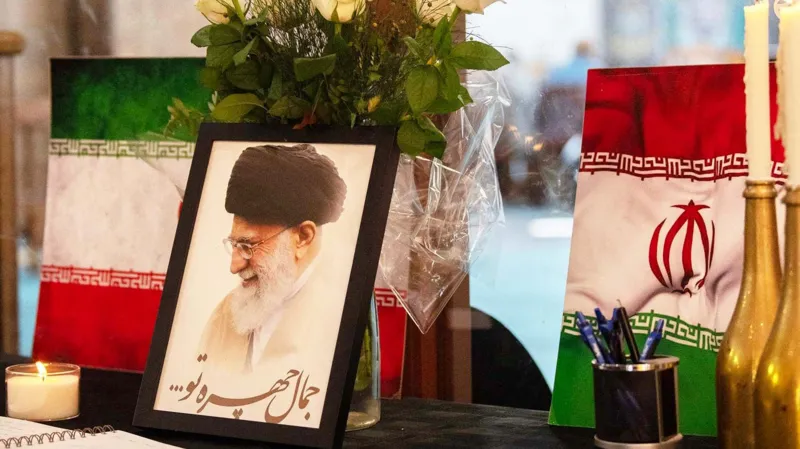
Reports from multiple international sources suggest that Ayatollah Ali Khamenei, Iran’s long-serving Supreme Leader, was killed in a highly coordinated aerial strike allegedly conducted by Israel using intelligence reportedly supplied by the Central Intelligence Agency. The operation, described as months in the making, is said to represent one of the most complex targeted missions in modern intelligence history.
Strategic Timing and Intelligence Build-Up
Security analysts indicate that the strike did not occur under cover of darkness as traditionally expected for such missions. Instead, it reportedly took place during mid-morning hours in Tehran, exploiting a narrow window of opportunity based on last-minute intelligence.
Key operational insights reported:
- Surveillance of senior Iranian leadership movements had allegedly been underway for months.
- Intelligence reportedly revealed a scheduled gathering of top political, military, and intelligence figures at a central compound.
- Analysts believe tracking methods may have included both human intelligence sources and advanced digital monitoring systems.
- According to statements attributed to Donald Trump, sophisticated tracking technologies played a role in locating the target.
Such long-term monitoring is commonly described by intelligence professionals as building a “pattern of life” — a method used to predict movement, routines, and vulnerabilities of high-value targets.
Operational Execution
Sources cited by The New York Times claim the intelligence was passed to Israeli forces, which then executed the strike using long-range aircraft capable of firing precision munitions without entering heavily defended airspace.
Reported strike details:
- Approximately 30 precision bombs were allegedly deployed around 09:40 local time.
- The compound was believed to contain underground protective structures.
- Multiple munitions may have been required to penetrate reinforced bunker systems.
- The operation may have been accelerated to exploit a brief intelligence window.
Military observers note that such coordinated operations typically require simultaneous satellite monitoring, signal interception, and real-time confirmation channels between allied command centers.
Simultaneous Targeting of Senior Officials
Unconfirmed reports state that additional locations in the capital were struck during the same operation. Among those reportedly killed were several high-ranking defense figures, including:
- Senior defense council leadership officials
- Top military command figures
- Intelligence leadership personnel
Meanwhile, Iranian President Masoud Pezeshkian reportedly issued a statement declaring himself safe after his office was allegedly targeted.
Strategic analysts say simultaneous targeting of multiple leadership nodes suggests the mission may have been designed not only as a decapitation strike but as the opening phase of a broader military or geopolitical campaign.
Command Oversight and Monitoring
According to sources, U.S. leadership monitored the operation from a temporary command setup at Mar-a-Lago, where senior officials reportedly tracked real-time developments and awaited confirmation.
It reportedly took several hours before confirmation of the primary target’s death reached decision-makers — a delay experts say is common when verifying high-value targets located in hardened or subterranean environments.
Security Failure or Intelligence Breakthrough?
Experts are divided on what the event indicates:
Possible Iranian security failure
- Inability to detect surveillance methods
- Vulnerabilities in internal counterintelligence
- Overconfidence in protective infrastructure
Possible intelligence superiority
- Rapid adaptation of surveillance technology
- Deep penetration of communication networks
- Advanced predictive analytics
Some analysts suggest Iran may have assumed a daylight strike was unlikely due to visibility risks, a miscalculation that may have contributed to operational success.
Succession Preparations
Reports indicate contingency plans had been drafted in advance for leadership succession, not only for the supreme leadership position but also for other senior officials. This suggests Iranian authorities had anticipated such a scenario and attempted to minimize institutional disruption.
Political scientists emphasize that such preparations do not eliminate instability risks; instead, they may only reduce immediate chaos while longer-term power struggles unfold.
Strategic Interpretation
Military strategists highlight that the alleged division of responsibilities between allied nations — with one focusing on intelligence and the other on execution — reflects evolving models of coalition warfare.
This approach allows:
- Faster decision-making
- Reduced operational exposure
- Greater deniability
- More precise targeting
If confirmed, this operation could redefine modern doctrines on targeted strikes against national leadership figures.
Regional and Global Implications
The reported strike raises several urgent geopolitical questions:
- Escalation Risk: Could retaliatory actions ignite wider regional conflict?
- Deterrence Doctrine: Will targeted leadership strikes become normalized?
- Intelligence Warfare: Are digital surveillance capabilities now the dominant battlefield?
- Alliance Dynamics: How will global powers react to such coordinated operations?
Security experts warn that leadership elimination does not automatically end conflicts. In many historical cases, it has intensified them.
Why It Matters
For ordinary citizens worldwide, this moment signals how rapidly geopolitical tensions can reshape global stability, fuel economic uncertainty, and influence security policies. If such precision leadership strikes become precedent, future conflicts may unfold less on battlefields and more through invisible intelligence wars that affect daily life across nations.
Leave a Reply