US Envoys Visit Pakistan as Diplomatic Efforts with Iran Continue
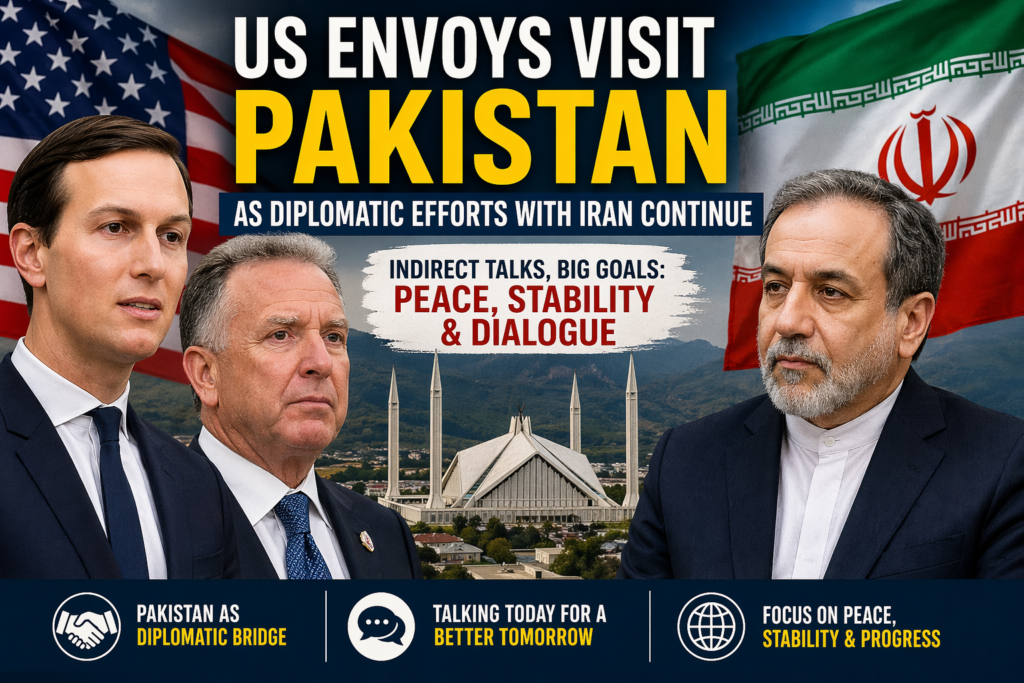
In a significant development in international diplomacy, senior United States representatives, including Jared Kushner and special envoy Steve Witkoff, are traveling to Pakistan to support ongoing diplomatic efforts involving Iran. The visit highlights renewed attempts to engage in dialogue amid a complex geopolitical environment that has drawn global attention.
While no direct meeting between US and Iranian officials has been formally scheduled, the presence of both delegations in Islamabad signals continued interest in exploring possible solutions through indirect communication channels.
Background of the Situation
Tensions between the United States and Iran have shaped international relations for decades, influenced by political, economic, and security concerns. Recent developments have once again brought the relationship into focus, particularly as global energy markets and regional stability are affected.
Earlier this year, a series of escalations led to increased uncertainty across the Middle East. Strategic waterways, especially the Strait of Hormuz, have been central to these developments due to their importance in global oil transportation. Any disruption in this region tends to have immediate worldwide economic implications.
Despite these challenges, both sides have repeatedly indicated—directly and indirectly—that diplomatic engagement remains an option. This latest visit to Pakistan appears to be part of that broader effort.
Role of Key Figures
The involvement of prominent figures such as Jared Kushner and Steve Witkoff underscores the importance the United States places on these discussions.
Kushner, known for his previous role in Middle Eastern diplomacy, brings experience in negotiation and strategic communication. Witkoff, serving as a special envoy, represents the administration’s direct diplomatic outreach efforts.
On the Iranian side, Foreign Minister Abbas Araghchi has arrived in Islamabad along with spokesperson Esmail Baqaei. Their presence indicates Iran’s willingness to engage in discussions through intermediaries, even while maintaining its official stance on direct talks.
Pakistan’s Strategic Role
Pakistan’s involvement as a host and facilitator is particularly noteworthy. Positioned at a crossroads between South Asia, Central Asia, and the Middle East, Pakistan has historically maintained diplomatic relationships with multiple global powers.
By hosting these discussions, Pakistan is playing a constructive role in promoting dialogue and reducing tensions. Meetings between Iranian officials and Pakistani leadership are expected to address:
- Regional security dynamics
- Bilateral relations
- Economic cooperation
- Broader geopolitical developments
Pakistan’s neutral stance allows it to serve as a bridge for communication, especially in situations where direct engagement between parties is limited.
Global Economic Implications
One of the most significant aspects of the current situation is its impact on global energy markets. The Strait of Hormuz is one of the world’s most critical oil transit routes, and any disruption can lead to fluctuations in oil prices.
Recent developments have already contributed to uncertainty in global markets. Analysts note that:
- Oil prices tend to rise when supply routes are threatened
- Investors respond quickly to geopolitical signals
- Long-term instability can affect economic growth worldwide
The continuation of diplomatic talks, even indirectly, is therefore seen as a positive sign for market stability.
Diplomatic Signals from Both Sides
Statements from officials on both sides suggest a cautious openness to dialogue.
The United States has emphasized that diplomacy remains a priority, with officials indicating that opportunities for constructive engagement are still available. The decision to send envoys to Pakistan reflects a willingness to listen and explore potential solutions.
At the same time, Iranian officials have reiterated their position on key issues while acknowledging the importance of communication. By sending high-level representatives to Islamabad, Iran is demonstrating that it remains engaged in the broader diplomatic process.
This combination of firmness and flexibility is typical in complex international negotiations, where progress often occurs gradually.
Challenges to Progress
Despite the positive signals, several challenges remain:
1. Trust Deficit
Years of strained relations have created a lack of trust between the two countries. Rebuilding confidence takes time and consistent effort.
2. Policy Differences
Key issues such as nuclear policy, economic sanctions, and regional influence continue to be points of disagreement.
3. Domestic Pressures
Leaders on both sides must consider domestic political factors, which can influence decision-making and limit flexibility.
4. Regional Dynamics
Other countries in the region also play a role, and their interests must be considered in any long-term solution.
Why Indirect Talks Matter
Even without direct meetings, indirect talks can play a crucial role in diplomacy. They allow both sides to:
- Communicate positions clearly
- Test possible compromises
- Reduce misunderstandings
- Build a foundation for future direct engagement
Pakistan’s role as an intermediary is especially valuable in this context, as it provides a neutral platform for these exchanges.
Broader Geopolitical Context
The current situation is part of a larger global landscape where multiple regions are experiencing shifts in alliances and power dynamics.
Countries around the world are closely watching developments between the United States and Iran because of their potential impact on:
- Energy security
- Trade routes
- Regional stability
- International cooperation
Any progress in dialogue could have far-reaching effects beyond the immediate region.
Potential Outcomes
While it is too early to predict the outcome of these discussions, several possibilities exist:
Gradual De-escalation
Continued dialogue could lead to reduced tensions and improved communication channels.
Confidence-Building Measures
Small agreements on specific issues could help build trust over time.
Framework for Future Talks
Even without immediate results, the current efforts could lay the groundwork for more formal negotiations later.
Continued Uncertainty
If significant differences remain unresolved, the situation may continue to evolve without a clear resolution in the short term.
Expert Perspectives
Many analysts believe that the willingness of both sides to remain engaged—despite challenges—is an encouraging sign.
Diplomacy often involves long and complex processes, where progress may not be immediately visible. However, consistent communication increases the likelihood of finding common ground.
Experts also highlight the importance of third-party facilitators like Pakistan, which can help maintain dialogue during periods of tension.
Conclusion
The visit of US envoys Jared Kushner and Steve Witkoff to Pakistan represents an important step in ongoing diplomatic efforts involving Iran. While no direct talks are currently planned, the presence of both sides in Islamabad demonstrates a shared interest in maintaining communication.
Pakistan’s role as a facilitator adds a valuable dimension to the process, offering a neutral platform for dialogue. At the same time, global attention remains focused on the situation due to its potential impact on energy markets and regional stability.
Although challenges remain, continued engagement suggests that diplomacy is still a viable path forward. Whether these efforts lead to significant breakthroughs or simply lay the groundwork for future discussions, they highlight the importance of communication in addressing complex international issues.
Leave a Reply