India’s snakebite crisis is killing tens of thousands every year
India’s Silent Epidemic: Why 50,000 Lives Are Lost to Snakebites Every Year
At Brainx, we believe…
This ongoing tragedy highlights a systemic failure in public health equity that treats rural lives as expendable. At Brainx, we believe that 50,000 annual deaths from a treatable condition is not a medical mystery, but a governance crisis. It exposes the “poverty penalty” where geography dictates survival, and underscores the urgent need to modernize an antivenom infrastructure that has barely evolved in decades.
The News: A Venomous Crisis in the Heartland
In the verdant fields of rural India, a silent killer claims more lives annually than many high-profile diseases combined. A startling new report by the Global Snakebite Taskforce (GST) has cast a spotlight on the devastating scale of snakebite fatalities in India, revealing a crumbling healthcare defense that leaves millions vulnerable.
The Human Cost: Devendra’s Story The statistics are grim, but the reality is visceral. Devendra, a farmer from central India, embodies the struggle of millions. While picking mulberry leaves—a routine agricultural task—he was struck.
- The Bite: He recalls the exact moment the fangs sank into his leg.
- The Delay: Like many, he did not receive immediate care. “I went to the hospital four days after I was bitten, when the pain became unbearable,” Devendra recounted.
- The Consequence: The delay was catastrophic. While Devendra survived, he lost his leg to amputation. He is considered one of the “lucky” ones.
The Staggering Statistics According to federal government data and independent studies, the scale of the crisis is unprecedented:
- Global Epicenter: India accounts for approximately 50,000 snakebite deaths each year, which is roughly half of the total snakebite deaths recorded worldwide.
- Hidden Toll: Some research suggests the official numbers are an undercount. A 2020 study estimated that between 2000 and 2019, India may have suffered as many as 1.2 million deaths, averaging 58,000 per year.
- WHO Priority: The World Health Organization (WHO) has designated snakebite envenoming as a “highest priority neglected tropical disease,” noting that it kills over 100,000 people globally per year and maims countless others.
The Healthcare Gap: Why Antivenom Fails The new GST report surveyed 904 medical professionals across the world’s most affected nations—India, Brazil, Indonesia, and Nigeria. The findings for India were damning:
- 99% Difficulty Rate: An astonishing 99% of healthcare workers in India reported facing significant challenges in administering antivenom.
- Infrastructure Failure: The primary barriers cited were poor medical infrastructure, limited access to the drugs, and insufficient training for staff.
- Critical Complications: Nearly half of the surveyed professionals stated that delays in treatment led to severe outcomes for their patients, including amputations, complex surgeries, or lifelong paralysis.
The “Golden Hour” and Infrastructure Collapse Dr. Yogesh Jain, a practitioner in Chhattisgarh, emphasizes that snake venom is a ticking clock. Depending on the species (neurotoxic or hemotoxic), venom can shut down the respiratory system or destroy blood coagulation within minutes or hours.
- The Rural Reality: In rural India, the “Golden Hour” for treatment is often lost to bad roads and a lack of ambulances.
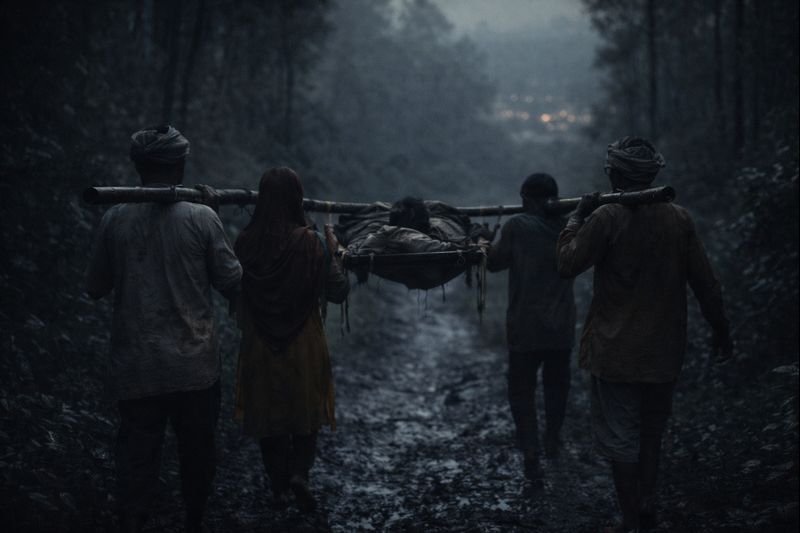
- Tragic Example: The report highlights a heartbreaking case from Gujarat last September, where a pregnant woman died en route to a hospital. Her family was forced to carry her in a cloth sling for 5 kilometers because no vehicle could reach their remote hamlet.
- Fear of Treatment: Even when patients reach clinics, help is not guaranteed. Many rural health workers fear administering antivenom due to the risk of anaphylactic shock (severe allergic reaction). “The antivenom is mixed with saline and injected intravenously over an hour, but many centers aren’t equipped to manage the side-effects,” Dr. Jain explains.
The “Big Four” vs. The Reality A major scientific hurdle is the mismatch between the antivenom available and the snakes actually biting people.
- The Big Four: Currently, India produces polyvalent antivenom targeting only the four most common venomous snakes: the Spectacled Cobra, Common Krait, Russell’s Viper, and Saw-scaled Viper.
- The Missing Antidotes: There are dozens of other deadly species—such as the Green Pit Viper in Himachal Pradesh or the Hump-nosed Pit Viper in the south—for which no specific antivenom exists.
- Ineffective Treatment: A study by AIIMS Jodhpur revealed that when standard antivenom was used for bites from unidentified species (likely localized vipers), two-thirds of patients did not respond well.
- Research Stalled: Organizations like The Liana Trust are working to milk venom from neglected species to develop new antidotes, but the process is labor-intensive and slow.
Government Action: A Plan on Paper In 2024, the Indian government launched the National Action Plan for Prevention and Control of Snakebite Envenoming (NAPSE).
- The Goal: To halve snakebite deaths by 2030.
- The Strategy: The plan focuses on surveillance, research, and community awareness.
- The Critique: Experts like Dr. Jain argue that implementation is inconsistent because the victims are primarily poor. “Snakebite deaths start where political will ends,” he asserts.
Why It Matters
This crisis matters because it perpetuates a cycle of poverty and disability that affects the backbone of India’s economy—its farmers. For the common man in rural India, a snakebite is not just a medical emergency; it is a potential economic death sentence that can bankrupt a family or remove a primary breadwinner. Until snakebites are treated with the same urgency as urban diseases, the countryside will continue to pay a bloody price for systemic neglect.
Leave a Reply