Starbucks bets on robots to brew a turnaround in customers
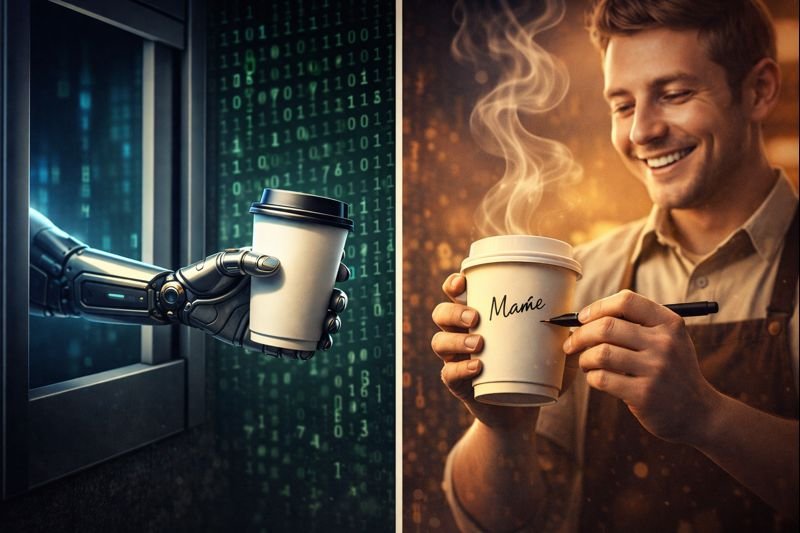
Starbucks CEO’s High-Stakes Gamble: Robots in the Drive-Thru, Handwritten Notes on the Cup
At Brainx, we believe…
This strategic pivot highlights a fascinating paradox in modern retail: using cold, hard AI to facilitate warm, human connection. At Brainx, we believe Starbucks is attempting a high-wire act—automating the “chore” of inventory and ordering to free up baristas for genuine hospitality. If successful, it proves that technology doesn’t have to replace the human touch; it can, in theory, rescue it from the drudgery of efficiency.
The News: Brewing a Comeback with AI and Nostalgia
Brian Niccol, the chief executive tasked with rescuing Starbucks from a slump, is orchestrating a radical transformation of the 55-year-old coffee giant. Facing sluggish profits and an identity crisis, the company is deploying a dual strategy: aggressive technological innovation behind the scenes and a return to “old school” coffeehouse vibes at the counter.
The “Invisible” AI Revolution
While customers see baristas, a silent digital workforce is taking over critical operations to streamline the business.
- Robotic Drive-Thrus: In select test locations, the friendly voice taking your order at the drive-thru is no longer a human, but an AI robot designed to process orders with precision and speed.
- Virtual Barista Assistants: Inside the store, staff have access to a virtual personal assistant that helps recall complex drink recipes and manage shift schedules, reducing mental load.
- Automated Inventory: A new scanning tool has been introduced to handle the tedious task of counting stock. This aims to eliminate the “out-of-stock” frustrations that have plagued the chain recently.
- The Goal: These innovations are part of a multi-million dollar investment intended to remove friction, allowing human staff to focus solely on making coffee and engaging with customers.
The “Human” Counter-Offensive
Niccol, who joined in 2024 after turning around Chipotle, argues that Starbucks lost its way by obsessing over spreadsheets rather than the customer experience. To fix this, he is implementing “vibe-based” changes:
- The Return of Sharpies: Staff are once again urged to write customer names on cups by hand, reviving a signature personal touch that defined the brand’s early years.
- Store Makeovers: A $150,000-per-store “uplift” program is underway to replace sterile interiors with inviting armchairs, new paint, and ceramic mugs, aiming to restore Starbucks as a “third place” for community gathering.
- Operational Simplicity: The menu has been simplified, and a target has been set for orders to be completed in four minutes or less.
Financial Realities and Pricing Power
Despite these efforts, the financial picture remains complex.
- Sales vs. Profits: Last week, Starbucks reported its first sales increase in two years at established US stores. However, shares slid 5% as investors worried that the $500 million spent on boosting staffing had eaten into profits.
- Cost Cutting: To balance the books, the company has promised to find $2 billion in cost savings over the next three years.
- Price Hikes on the Table: Unlike last year, Niccol is not ruling out price increases, though he calls it “the last lever I want to pull.” He hopes receding inflation and lower coffee bean prices—aided by President Trump removing coffee tariffs—will help keep prices stable.
The Union Shadow
A significant hurdle remains the ongoing battle with unionized workers.
- Stalled Talks: Organizers accuse Niccol of stonewalling contract negotiations.
- CEO Pay Gap: The dispute has highlighted the disparity in compensation. Niccol received a package worth $97 million in 2024 and $30 million last year, compared to the average employee’s earnings of about $17,300.
- Niccol’s Stance: He claims to be “wildly open” to a deal but emphasizes it must be “viable and sustainable.”
Why It Matters
This matters because Starbucks is a bellwether for the entire service industry. If Niccol succeeds, it creates a blueprint for how massive corporations can use AI not to fire workers, but to “humanize” their jobs. For the common man, it means your morning coffee run might finally become faster and friendlier. However, if the cost-cutting measures and union disputes aren’t resolved, the “third place” might just become another expensive, automated vending machine.
Leave a Reply