Mission Success: Rocket Lab Deploys First Dedicated Launch for Japan Aerospace Exploration Agency (JAXA)
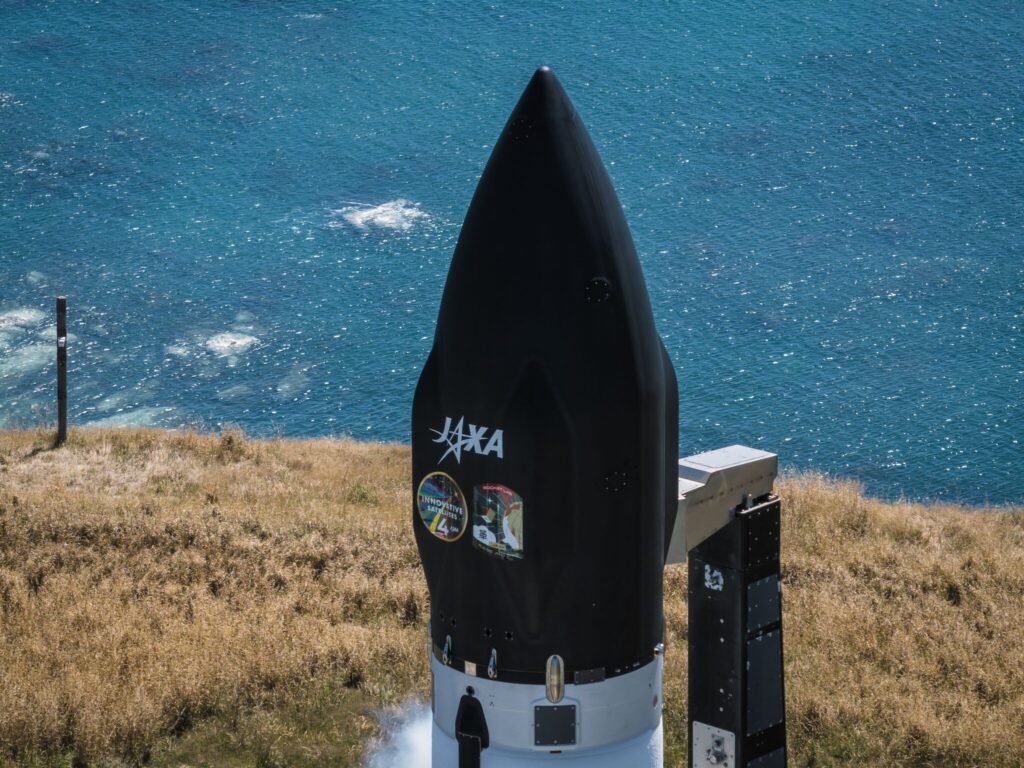
Rocket Lab Shatters Records: The Historic ‘RAISE And Shine’ Mission Defining a New Space Era
Brainx Perspective
At Brainx, we believe the “RAISE And Shine” mission represents a pivotal shift in global aerospace dynamics. This collaboration between Rocket Lab and JAXA highlights that reliable commercial partnerships are now the backbone of national space ambitions. Rocket Lab’s ability to execute 19 flawless launches in a single year is not just an operational milestone; it is the definitive blueprint for the future of the scalable space economy.
The News: A Milestone in Mahia
On December 14, 2025, the aerospace world witnessed a masterclass in orbital precision as Rocket Lab (Nasdaq: RKLB) successfully executed its 19th mission of the year. Launching from the Mahia Peninsula in New Zealand, the “RAISE And Shine” mission deployed the RAISE-4 satellite for the Japan Aerospace Exploration Agency (JAXA). This event marks a historic first dedicated launch for the Japanese agency by Rocket Lab, cementing the company’s status as the premier global launch provider for small satellites.
Key Mission Facts:
- Mission Name: “RAISE And Shine”
- Launch Date: December 14, 2025
- Launch Site: Launch Complex 1, Mahia Peninsula, New Zealand
- Vehicle: Electron (Two-stage rocket with Kick Stage)
- Customer: Japan Aerospace Exploration Agency (JAXA)
- Primary Payload: RAISE-4 (Rapid Innovative payload demonstration SatellitE-4)
- Significance: Rocket Lab’s 19th successful launch of 2025, setting a new annual company record.
Deep Dive: The Engineering Marvel of the Mission
To understand the magnitude of this success, one must look beyond the headline and into the technical execution that defines Rocket Lab’s “Electron” vehicle.
The Flight Profile
The launch window, timed perfectly for 16:09 NZDT, was dictated by the specific orbital parameters required by JAXA. The Electron rocket, standing 18 meters tall and constructed from advanced carbon composite materials, performed a complex dance against gravity.
- Stage 1 Ascent: Powered by nine 3D-printed Rutherford engines, the rocket lifted off with over 43,000 lbs of thrust. These engines are unique in the industry for utilizing electric pumps powered by batteries, rather than complex gas generators.
- Stage Separation: Following a clean Main Engine Cutoff (MECO), the first stage separated, falling back to Earth. In many of Rocket Lab’s missions, this stage is recovered to advance reusability data.
- The Kick Stage Advantage: The true differentiator for this mission was the Kick Stage. After the second stage placed the payload into an elliptical parking orbit, the Kick Stage—powered by the Curie engine—fired to circularize the orbit. This allowed the RAISE-4 satellite to be deployed with pinpoint accuracy, a requirement for its sensitive experimental instruments.
The Payload: Unpacking JAXA’s RAISE-4
The “RAISE And Shine” mission was not just about the rocket; it was about the cargo. The RAISE-4 satellite acts as a critical bridge between theoretical research and practical application in space.
An Orbital Laboratory
RAISE-4 is part of JAXA’s “Innovative Satellite Technology Demonstration Program.” In the high-stakes world of space exploration, you cannot simply launch unproven technology on a billion-dollar flagship mission. You must test it first. RAISE-4 carries eight distinct experimental payloads developed by a consortium of Japanese universities, research institutes, and private companies.
Technologies Being Tested Include:
- Next-Gen Thrusters: Testing new forms of propulsion that could power future deep-space probes.
- Advanced Sensors: Evaluating the durability of commercial-off-the-shelf (COTS) sensors in the high-radiation environment of Low Earth Orbit (LEO).
- Communication Arrays: Trialing high-bandwidth antennas that could improve internet connectivity in remote regions.
By providing a platform for these tests, Rocket Lab is effectively accelerating the R&D cycle for the entire Japanese space sector.
Strategic Analysis: Why JAXA Chose Rocket Lab
The decision by a major national agency like JAXA to use a foreign commercial provider is significant. Historically, nations have been protective of their sovereign launch capabilities. Japan boasts its own impressive fleet, including the H3 and Epsilon rockets. So, why fly with Rocket Lab?
1. The Dedicated Launch Model
Most small satellites are launched as “rideshares”—meaning they are secondary passengers on a massive rocket (like a SpaceX Falcon 9) carrying a larger primary payload. In that scenario, the small satellite has no control over the schedule or the specific orbit; it is like taking a bus. Rocket Lab offers a “taxi service.” JAXA paid for a dedicated mission, giving them total control over:
- Exact Launch Timing: Critical for coordinating with ground stations.
- Precise Orbital Insertion: Ensuring the satellite is exactly where it needs to be without wasting its own fuel to get there.
2. Proven Reliability
The space industry is unforgiving. Insurance premiums for satellites are driven by the reliability of the launch vehicle. With 19 successful launches in 2025 alone, the Electron rocket has reached a level of maturity that classifies it as a low-risk vehicle. For a government agency spending taxpayer money, this reliability is paramount.
3. Global Alliances
This mission underscores the strengthening ties between the United States, New Zealand, and Japan. In an era where space is becoming a contested domain, interoperability between allied nations is crucial. Using a US-headquartered company (Rocket Lab) launching from New Zealand creates a resilient supply chain for Japanese space assets.
2025 In Review: Rocket Lab’s Record-Breaking Year
The “RAISE And Shine” mission was the capstone of a phenomenal year. Completing 19 launches in 12 months is a feat that few companies in history have achieved.
The “Rapid Launch” Capability
Earlier in 2025, Rocket Lab demonstrated the ability to launch two missions within 48 hours from the same pad. This “rapid turnaround” capability is the holy grail for defense sectors. It implies that if a satellite is disabled or destroyed, Rocket Lab can replace it almost immediately. This capability has attracted significant attention from the U.S. Space Force and arguably influenced JAXA’s confidence in the provider.
Dual-Hemisphere Operations
Rocket Lab’s success in 2025 was fueled by its unique infrastructure:
- LC-1 (New Zealand): Handles the bulk of commercial and high-inclination missions.
- LC-2 (Virginia, USA): Dedicated to U.S. government payloads and intelligence missions. This geographic diversity ensures that weather delays or regulatory hold-ups in one country do not ground the entire fleet.
Economic Impact: The Business of Space
For investors and industry analysts, the “RAISE And Shine” mission offers several bullish signals regarding the space economy.
Diversification of Revenue
While Rocket Lab is famous for launches, its Space Systems Division is a massive revenue driver. The company builds reaction wheels, star trackers, and solar panels for other satellites. By launching for JAXA, Rocket Lab opens the door to cross-selling these components to the Japanese market. The relationship starts with a launch but expands into supply chain integration.
Market Dominance in Small Launch
The small launch market has seen many competitors fail (e.g., Virgin Orbit, Astra’s early struggles). Rocket Lab has effectively monopolized the reliable end of this market. They are currently the only small launch provider that can offer “airline-like” regularity. This dominance allows them to command premium pricing compared to riskier, unproven competitors.
Future Outlook: Neutron and Beyond
As we look toward 2026, the success of the Electron rocket serves a larger purpose: funding the Neutron rocket.
The Neutron Rocket
Currently in development, Neutron is Rocket Lab’s answer to the SpaceX Falcon 9. It is a medium-lift, fully reusable rocket designed to deploy “mega-constellations” (thousands of internet satellites).
- Why it matters: Electron generates consistent cash flow and builds reputation. This financial stability allows Rocket Lab to develop Neutron without relying solely on debt or dilution.
- The JAXA Connection: Building trust with agencies like JAXA now with Electron positions Rocket Lab to win massive contracts for Neutron in the future, launching heavier interplanetary probes or supply missions to the Moon.
Upcoming Missions
Rocket Lab has already confirmed a second dedicated mission for JAXA in Q1 2026, alongside a mission for the European Space Agency (ESA). This indicates a snowball effect: success breeds more success. The global backlog for launch services is growing, and Rocket Lab is perfectly positioned to capture it.
Why It Matters
The successful deployment of RAISE-4 is more than a technical win; it is a quality-of-life win for the common man. The technologies tested on this satellite—better sensors, cleaner propulsion, faster communications—eventually trickle down to Earth. They improve how we monitor climate change, how we track severe weather to save lives, and how we connect rural communities to the internet. Furthermore, this mission proves that the space economy is becoming sustainable, driving job creation and technological advancement that benefits humanity globally.
Frequently Asked Questions (FAQ)
Q1: What is the primary function of the RAISE-4 satellite? A: RAISE-4 acts as an orbital testbed. Its main function is to validate eight new experimental technologies—ranging from propulsion systems to sensors—developed by Japanese researchers. Validating them in space is necessary before they can be used on expensive, critical missions.
Q2: Why is the “Kick Stage” important for this mission? A: The Kick Stage is a small third stage on the Electron rocket. It provides the final “push” to circularize the orbit and deploy the satellite with extreme precision. For a technology demonstration like RAISE-4, being in the exact correct orbit is crucial for gathering accurate data.
Q3: How does Rocket Lab compare to SpaceX? A: SpaceX generally focuses on heavy payloads and rideshare missions using the massive Falcon 9. Rocket Lab specializes in “dedicated” small launches using the Electron. Think of SpaceX as a bus (cheap, fixed route) and Rocket Lab as a taxi (premium, goes exactly where and when you want).
Q4: What does the 19th launch record signify for investors? A: It signifies operational maturity and reduced risk. Consistency attracts high-value government contracts and lowers insurance costs. For investors, it shows that Rocket Lab has moved past the “start-up” phase and is now a reliable industrial operator.
Q5: Will Rocket Lab launch for JAXA again? A: Yes. Rocket Lab has already manifested a second mission for JAXA scheduled for the first quarter of 2026, indicating a long-term strategic partnership.
Q6: What is the “Neutron” rocket mentioned in the article? A: Neutron is Rocket Lab’s upcoming medium-lift launch vehicle. It will be larger than Electron, capable of carrying humans and heavy cargo, and will be fully reusable. It is designed to compete directly with SpaceX’s Falcon 9.




Leave a Reply