US and Israel Have Attacked Iran — Here’s What We Know and What Happens Next
US and Israel Have Attacked Iran — Here’s What We Know and What Happens Next
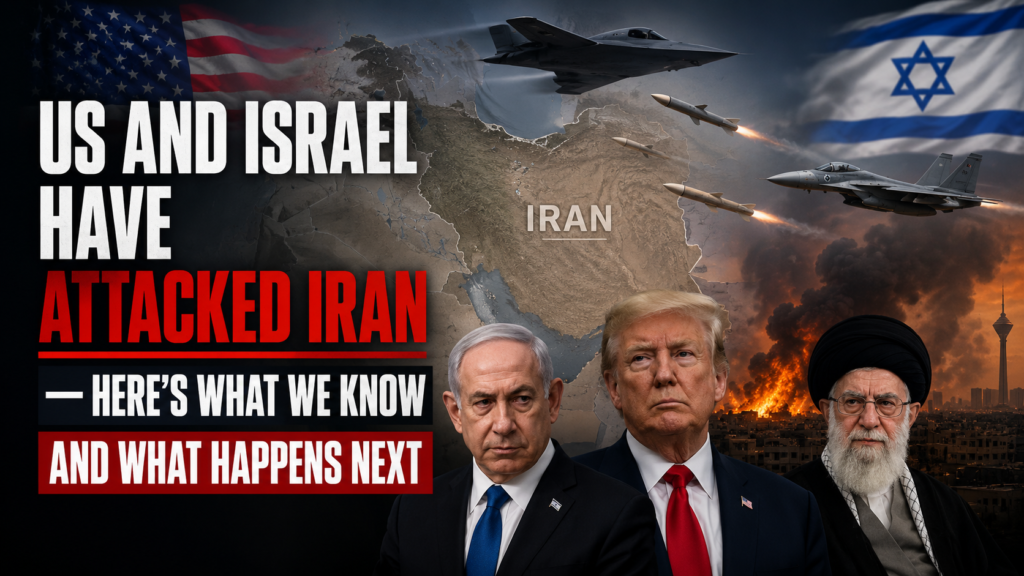
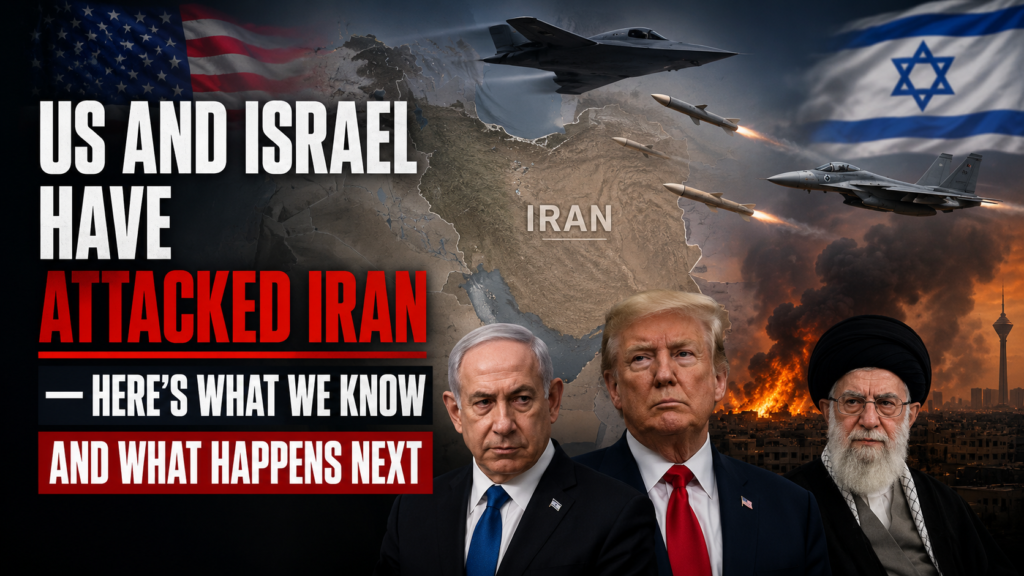
In what is being called one of the most significant military escalations in the Middle East in decades, the United States and Israel have launched attacks on Iran — even as diplomatic negotiations about the conflict were reportedly still ongoing behind closed doors.
This is a developing situation, and full details are still emerging. But here is what we know so far, and why this moment matters far beyond just the countries directly involved.
What Happened?
Reports confirmed that US military forces carried out strikes on Iranian targets, in coordination with Israel. The timing is particularly striking — these attacks came while talks about a potential resolution to the conflict were still in progress.
This is not how such operations typically unfold. Military strikes during active negotiations represent a dramatic escalation and suggest that either the talks had effectively collapsed, or that one or both sides decided military action was preferable to a negotiated outcome.
The full scope of the strikes — what was targeted, the scale of damage, and Iranian casualties — is still being assessed as of this writing.
Why Did This Happen?
To understand this moment, you need a bit of context.
Tensions between the US, Israel, and Iran have been building for years, driven by several overlapping conflicts: Iran’s nuclear program, Iranian support for proxy groups in the region including Hezbollah and Hamas, the ongoing conflict in Gaza, and a broader struggle for influence across the Middle East.
Israel has long viewed Iran as an existential threat. Iranian leaders have made statements about Israel’s existence that Israeli policymakers take with deadly seriousness. And the US, under its current administration, has maintained a hawkish position toward Iran.
The question analysts have debated for years was never really “if” this moment would come, but “when” and “what form it would take.”
What Does Iran Do Next?
This is the question that will define the coming weeks.
Iran has several options, none of them simple. It can retaliate militarily — either directly or through proxy groups across the region. It can accelerate its nuclear program in response. It can attempt to close the Strait of Hormuz, through which a significant portion of global oil supply flows, creating massive economic disruption. Or it can attempt a diplomatic response, seeking international condemnation and support.
Most likely, Iran will pursue some combination — symbolic or limited military responses through proxies, while using the attacks as leverage in international diplomacy to isolate the US and Israel.
What it will almost certainly not do is simply absorb the strikes and move on. That would be seen as weakness by domestic audiences and would undermine the government’s standing at home.
What Does This Mean for the Region?
The broader Middle East is already under enormous strain. The conflict in Gaza has been ongoing. Lebanon has seen Hezbollah involvement. Yemen has been a site of proxy conflict. Adding direct US-Iran military engagement into this picture significantly raises the risk of a much wider regional war.
Countries like Saudi Arabia, Jordan, and the Gulf states — which have complex relationships with both Iran and the US — now face pressure to define their positions more clearly.
Pakistan, which shares a border with Iran and has its own complex relationship with both the US and regional powers, will be watching this situation very closely. Any major regional escalation has potential spillover effects on South Asia.
What Does This Mean for Oil Prices and the Global Economy?
Iran sits in one of the most strategically significant geographic positions on earth for global energy markets. The Strait of Hormuz — which Iran borders — is the chokepoint through which roughly 20% of the world’s traded oil passes every day.
Even the threat of disruption to this route sends oil prices higher. Actual disruption would be felt immediately at petrol pumps across the globe, including in Pakistan.
Expect oil markets to be volatile in the coming days as the situation develops.
What Should You Watch For?
As this story develops, the key things to track are:
Iranian government statements — their official response will signal how serious the escalation is and what kind of retaliation they are signaling.
Proxy activity — Hezbollah in Lebanon, Houthi attacks on shipping in the Red Sea, and other Iranian-linked groups will be indicators of Iran’s chosen response strategy.
International reactions — whether major powers like China, Russia, and European nations condemn the strikes matters for what kind of diplomatic support Iran can mobilize.
Oil price movements — a practical indicator of how markets are assessing the risk of further escalation.
The Bottom Line
What happened between the US, Israel, and Iran is not just a regional story. It has the potential to reshape the entire Middle East, affect global energy prices, and draw other major powers into a broader confrontation.
This is the kind of moment that history books will reference. Whether it becomes a brief, contained escalation or the beginning of something much larger depends on decisions being made in Washington, Tel Aviv, and Tehran in the coming hours and days.
We will continue to update this story as new information becomes available.
Leave a Reply