Virus-Hit Cruise Ship MV Hondius Finally Arrives in Tenerife After Deadly Outbreak
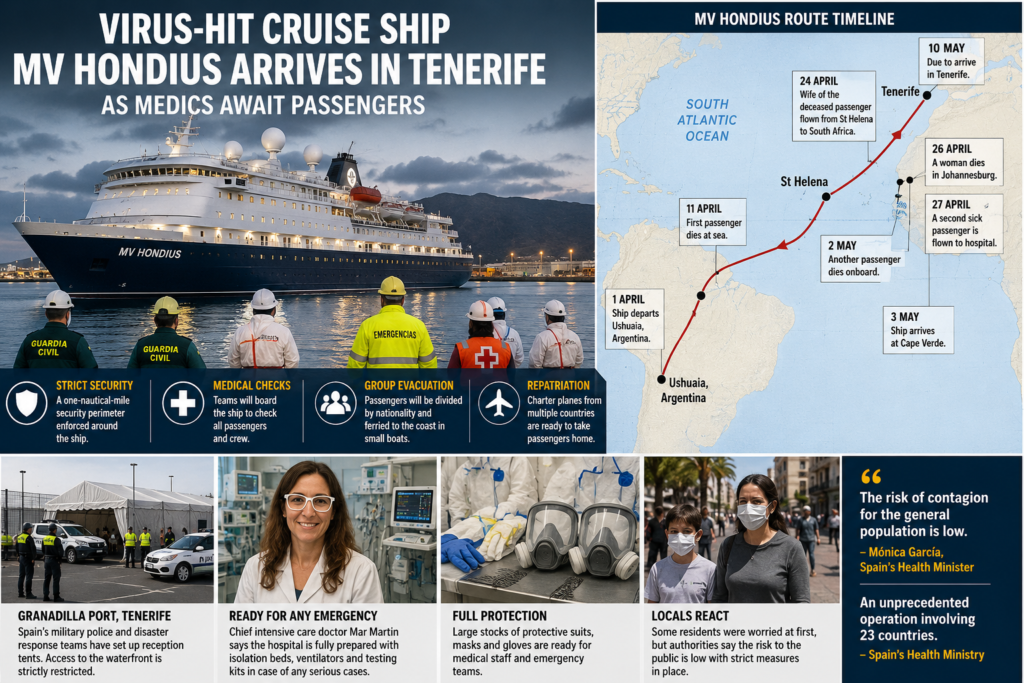
After spending weeks stranded at sea due to a deadly virus outbreak, the expedition cruise ship MV Hondius has finally arrived near Tenerife in Spain’s Canary Islands. The ship’s arrival triggered one of the largest emergency health operations carried out in the region in recent years, as authorities prepared to safely evacuate passengers and crew members while preventing any possible spread of infection.
The vessel approached the southern coast of Tenerife before sunrise under heavy monitoring from Spanish health and security officials. Even after reaching the island, the ship was not immediately allowed to dock. Authorities established a strict security perimeter around the vessel to maintain isolation during the operation.
The crisis began several weeks earlier during the ship’s expedition journey in South America. Reports later confirmed that multiple passengers became infected with a rare strain of hantavirus believed to have originated in southern Argentina. The virus is commonly linked to rodents, especially in remote wildlife regions. While transmission between humans is considered uncommon, the outbreak onboard caused major concern after several passengers died.
As the situation worsened, countries around the world coordinated efforts to help their citizens return home safely. Spain eventually agreed to receive the ship and organize a controlled evacuation operation in Tenerife. Medical experts, emergency response teams, military personnel, and international health officials worked together for days preparing the port and surrounding areas.
When the MV Hondius reached the designated zone near Granadilla port, specialized medical teams boarded the ship to inspect passengers and crew for symptoms. According to health officials, no additional serious cases were reported during the final stage of the journey, providing some relief to authorities managing the operation.
Passengers were separated into groups based on nationality before being transported to shore in small controlled transfers. Several governments arranged special charter flights to repatriate their citizens immediately after arrival. Aircraft equipped for medical emergencies were also placed on standby in case any passenger required urgent isolation or treatment.
Spanish citizens returning from the ship were expected to undergo mandatory quarantine and health monitoring. Authorities explained that precautionary measures were necessary because hantavirus can have a long incubation period, meaning symptoms may not appear for several weeks.
Hospitals across Tenerife prepared isolation wards and intensive care units ahead of the ship’s arrival. Doctors and nurses received additional protective equipment including masks, gloves, and full-body safety suits. One hospital established a fully equipped infectious disease unit with ventilators and emergency testing systems ready for immediate use.
The arrival of the cruise ship initially caused concern among some residents of Tenerife. A number of local workers and community members questioned whether bringing the vessel to the island could create unnecessary risks. Memories of the Covid-19 pandemic also increased anxiety among residents who feared another health emergency.
However, Spanish health officials repeatedly reassured the public that the risk to the wider population remained very low. Experts explained that hantavirus spreads differently from airborne viruses such as Covid-19 and usually requires close contact for transmission. Authorities emphasized that strict isolation protocols were being followed throughout the evacuation process.
International health organizations also praised the operation. Officials described Spain’s response as highly organized and effective, noting the cooperation between medical services, emergency responders, and multiple governments involved in the mission.
For the passengers and crew aboard the MV Hondius, reaching Tenerife marked the end of an exhausting and emotional journey. Many had spent weeks living under uncertainty while isolated at sea, unsure when they would finally return home. Although the evacuation operation offered relief, many travelers still faced long quarantine periods and continued medical observation after leaving the ship.
The incident has once again highlighted the challenges governments face when managing infectious disease outbreaks during international travel. It also demonstrated how quickly global cooperation becomes necessary when public health emergencies cross borders and involve multiple countries.
Leave a Reply